
Yes. Employers in Northern Ireland can lawfully use CCTV in the workplace, including where staff are captured on camera. But the system has to be justified, proportionate, documented and openly communicated. Monitoring that is installed quietly, points at the wrong places, or records audio by default is where employers get into trouble.
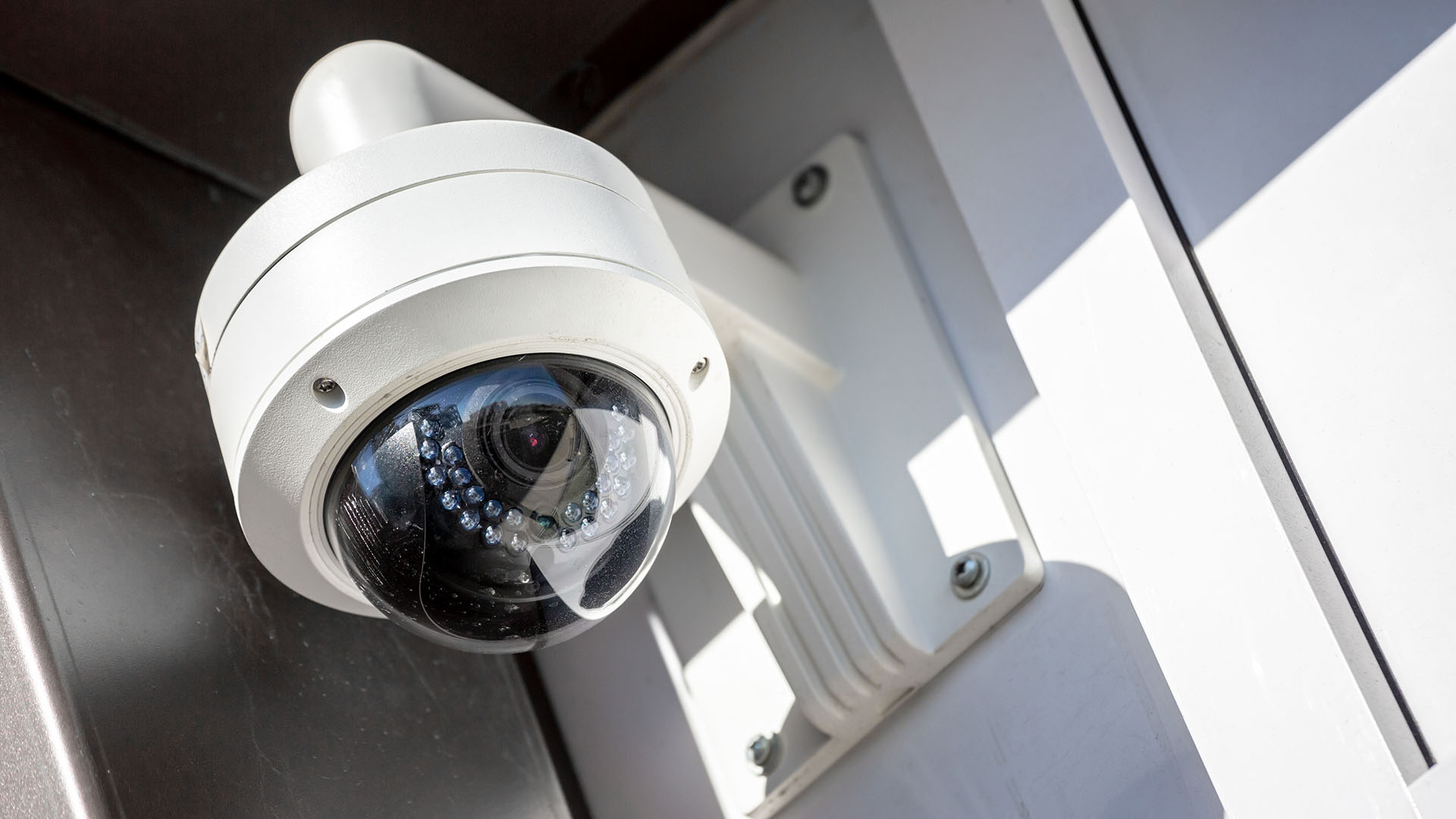
Workplace CCTV is not a grey area, and it is not banned. It is regulated. The rules come from UK GDPR and the Data Protection Act 2018, interpreted for employers by the Information Commissioner’s Office in its guidance Employment practices and data protection: monitoring workers, published on 3 October 2023. That guidance replaced Part 3 of the older Employment Practices Code and is now the reference point any Northern Ireland employer will be measured against.
The practical test is straightforward. Can you explain, in writing and before you switch anything on, why the cameras are there, what problem they solve, why a less intrusive option would not work, and what you told your staff? An employer who can answer those four questions is almost always fine. An employer who installed cameras because a director wanted to see who was arriving late, and never wrote anything down, is exposed on two fronts at once: a data protection complaint to the ICO, and a separate claim through the Northern Ireland industrial tribunal system if any of that footage is later used in a disciplinary process.
That second front is the one most employers miss, and it is why Northern Ireland deserves its own guide rather than a copy of the England and Wales version.
Why Northern Ireland employers cannot just follow English guidance
Data protection is a reserved matter. The ICO regulates the whole of the UK, and there is no separate Northern Ireland data protection authority, so the ICO guidance applies here exactly as it does in Manchester or Cardiff.
Employment law is where the two diverge sharply. Northern Ireland has its own statute book. The Employment Rights Act 1996 does not apply here. The equivalent is the Employment Rights (Northern Ireland) Order 1996, and disputes are heard by industrial tribunals, not employment tribunals. Conciliation runs through the Labour Relations Agency rather than Acas.
This matters more than a naming quirk. If CCTV footage becomes evidence in a dismissal, the fairness of that dismissal is judged under the Northern Ireland Order, and the tribunal will look at how the footage was obtained. Evidence gathered through monitoring that breached data protection law does not automatically become inadmissible, but it makes the employer’s procedural position considerably harder to defend. An HR policy downloaded from an English template, referencing the wrong legislation and the wrong tribunal, is a poor starting point for that argument.
The practical consequence for an office fit-out in Belfast or a depot in Craigavon is that your CCTV documentation needs to satisfy two different bodies of law at once. The design and privacy work satisfies the ICO. The policy, the staff communication and the disciplinary procedure need to stand up in front of an industrial tribunal under Northern Ireland legislation.
When does workplace CCTV need a DPIA?
A Data Protection Impact Assessment is a written risk assessment carried out before monitoring begins. Under UK GDPR Article 35, one is required where processing is likely to result in a high risk to people’s rights and freedoms.
Systematic monitoring is one of the ICO’s screening criteria for high risk, and continuous CCTV covering a workplace generally meets that description. So the honest position is this: a DPIA is likely to be required for most workplace CCTV monitoring, and the ICO recommends carrying one out as standard practice even where the risk level is uncertain.
There are cases where it moves from likely to mandatory. If your system uses facial recognition, or any biometric data, or processes special category data, a DPIA is required outright.
A workable DPIA for an office CCTV system covers:
- The purpose. Not “security”. Something specific, such as protecting stock in a goods-in area after two overnight break-ins.
- What is captured. Camera positions, fields of view, whether staff are incidentally or deliberately in frame, retention period.
- Necessity and proportionality. What else you considered. Better locks, restricted access control on one door, improved lighting. Why those were not sufficient on their own.
- Risks to workers. Being recorded during breaks, at a personal conversation, or on the way to a toilet or prayer room.
- Mitigations. Privacy masking, restricted playback rights, an audit trail on who viewed what.
- Sign-off. Dated, named, reviewed on a set cycle.
The DPIA is not paperwork for its own sake. It is the document that turns “we have cameras” into a defensible decision, and it is the first thing the ICO will ask for.
Where you can and cannot put workplace cameras
Placement is where good intentions fail. The governing principle is proportionality: the more private the space, the higher the bar, and in some spaces the bar is effectively unreachable.
| Location | Position | What makes it defensible |
|---|---|---|
| Entrances, reception, car parks | Generally acceptable | Clear crime prevention or access control purpose, signage at the perimeter |
| Stock rooms, goods-in, cash handling areas | Generally acceptable | Specific loss or safety risk, documented in the DPIA |
| Server rooms, plant rooms, restricted areas | Generally acceptable | Access control and asset protection purpose |
| Open-plan desks pointed at individuals | Hard to justify | Needs a specific risk, not general productivity oversight |
| Break rooms, canteens, staff kitchens | Hard to justify | High expectation of privacy, rarely proportionate |
| Toilets, changing rooms, showers, prayer rooms | Effectively never justifiable | Treat as off limits |
Two design decisions do most of the work here. The first is privacy masking, where parts of the camera’s field of view are permanently blacked out in the recorder. A camera covering a fire exit can be masked so it does not also record the adjacent break area. The second is camera selection. A fixed camera with a considered lens choice covers the area you actually need. A PTZ camera that any operator can swing across the office floor is far harder to defend, because the field of view is no longer fixed by design.
Signage is the third element, and it is not optional. Staff and visitors need to know before they enter that recording is taking place, who operates the system, and how to make a subject access request.
Audio recording: the line many workplaces cross
Cameras with built-in microphones are now standard on many IP models, and audio is frequently enabled by default. It is a common compliance failure on existing office systems.
Recording conversations is significantly more intrusive than recording images. The ICO’s position is that continuous audio recording in a workplace will be very difficult to justify, and it should be an exception rather than a feature you leave switched on because the camera shipped that way.
A camera at a trade counter capturing what a customer says at the point of a transaction is one thing, provided it is documented and signposted. A camera in an open-plan office recording every conversation staff have at their desks is a different proposition entirely, and it will not survive scrutiny.
The safe default is simple: audio off unless there is a specific, written justification for it being on. Our guide to CCTV audio recording in the workplace covers this in more detail. During a survey this should be an explicit yes or no decision recorded against each camera, not something left to factory settings. If audio is enabled anywhere, the signage must say so, because staff cannot consent to or object to something they have not been told about.
The same logic applies to any analytics feature bundled with modern systems. Loitering detection on a stock room door is defensible. Behavioural analytics that score how long individual staff spend away from their desk moves from security into performance management, and that changes both the purpose and the risk profile of your entire system.
Covert monitoring: the exception, not the tool
Covert monitoring means recording without telling the people being recorded. It is lawful in Northern Ireland only in exceptional circumstances, and the threshold is high.
The conditions are cumulative, not a menu. All of them must be met:
- There is genuine suspicion of criminal activity or equivalent gross misconduct.
- Telling staff would prejudice the detection or prevention of that activity.
- No less intrusive method is realistically available.
- It is authorised in writing by senior management before it begins.
- A DPIA is completed first.
- It is targeted at the specific suspicion and time limited, not blanket or indefinite.
Covert monitoring is a short, specific investigative measure with a start date and an end date. It is not a standing capability. An employer who leaves a hidden camera running for months has lost the exceptional-circumstances justification, whatever the original reason was.
It is worth being blunt about the risk. Covert monitoring carried out badly can convert a straightforward misconduct dismissal into an unfair dismissal claim under the Employment Rights (Northern Ireland) Order 1996, because the tribunal will examine the process as well as the conduct. The evidence you gathered can end up costing more than the conduct it proved.
Do you need to register with the ICO?
Almost certainly yes. Operating CCTV that identifies individuals is processing personal data by automated means, which triggers the requirement to pay the annual data protection fee.
The narrow exemptions, such as processing purely for staff administration or advertising, do not cover CCTV of staff or the public. If a business relies on the “accounts and records” exemption and then installs a single camera for crime prevention, that exemption is voided and the fee becomes payable.
The fee is set in three tiers based on turnover and staff numbers, and most small businesses fall into the lowest tiers. The ICO publishes the current amounts on its website.
Registration is a UK-wide requirement handled directly by the ICO. There is no separate Northern Ireland registration to complete alongside it. Our free ICO registration checker shows whether your organisation is already on the register.
What we often see on existing office systems
From a survey perspective, the pattern across Northern Ireland offices is consistent, and it is rarely bad intent. It is systems that grew without documentation.
The most common finding is the inherited system. A business takes over a unit in Belfast or Lisburn, the cameras are already there, and nobody knows who commissioned them, what the retention period is set to, or who still holds a login. It is not unusual for former staff or a previous installer to still have live remote access to the recorder. That is a live data protection exposure, and it is fixed in an afternoon by rebuilding the user accounts and setting a documented retention period.
The second is retention drift. A recorder set up years ago is simply overwriting when the disk fills, which means retention is determined by hard drive size rather than by any decision the business made. Retention should be a deliberate choice tied to purpose, typically measured in days or weeks for general security use, and it should be configured rather than left to chance.
The third is the audio default described above, which is easy to miss because many cameras ship with audio switched on.
None of these are expensive to fix. What they demonstrate is that workplace CCTV compliance is largely a commissioning and documentation discipline, not a hardware problem. A system designed against BS EN 62676-1-1 for general system requirements, and planned, installed and commissioned in line with the application guidelines in BS EN 62676-4, produces the documentation trail as a by-product of doing the job properly. The handover pack, camera schedule and commissioning record are exactly the evidence you need if the ICO or an industrial tribunal ever asks.
What happens next
- Free site survey. We assess your premises, camera by camera, and identify what is defensible and what is not.
- Design and documentation. A camera schedule with fields of view, privacy masking, retention and audio decisions recorded against each position, so your DPIA has something concrete to reference.
- Installation and commissioning. Systems designed and commissioned to the BS EN 62676 series, with a full handover pack.
- Aftercare. Scheduled maintenance, user account reviews and a documented point of contact for subject access requests.
If you have an existing office system and no paperwork behind it, a survey is the fastest way to find out where you stand.
Questions employers ask
Do I have to tell staff before installing CCTV in the office?
Yes. Transparency is a core requirement, and staff must be informed before monitoring begins, not after. In practice that means three things working together: signage at every entrance and in every monitored area, a written CCTV or monitoring policy issued to staff, and a privacy notice explaining the purpose, the retention period, who can view footage, and how to make a subject access request. Consultation with staff or their representatives before installation is strongly advisable, and it also strengthens your position under the Employment Rights (Northern Ireland) Order 1996 if footage is later used in a disciplinary process. The only exception is properly authorised covert monitoring, which is limited to exceptional circumstances.
Can an employee ask to see CCTV footage of themselves?
Yes. Footage that identifies an individual is their personal data, so an employee can make a subject access request for it. You generally have one month to respond. The complication is third parties: if other identifiable people appear in the same footage, you must either obtain their agreement or redact them, usually by blurring faces. Redaction takes time and specialist software (see our CCTV video redaction service), which is why a short, deliberate retention period and a clear camera schedule make these requests far easier to handle. A request cannot be refused simply because it is inconvenient or because it relates to an ongoing disciplinary matter.
Can CCTV footage be used as evidence in a disciplinary or dismissal?
It can, provided the footage was lawfully obtained and used for a purpose consistent with why the system was installed. Difficulty arises when a system installed purely for crime prevention is then used for performance management, because that is a change of purpose the workforce was never told about. Northern Ireland claims are heard by industrial tribunals under the Employment Rights (Northern Ireland) Order 1996, with conciliation through the Labour Relations Agency. Tribunals examine procedural fairness closely, so how the footage was obtained, whether staff were informed, and whether a DPIA existed all bear on whether a dismissal is found to be fair.
How do UK GDPR and the Data Protection Act 2018 apply to workplace CCTV?
The two pieces of law that together govern how personal data is handled in the UK. CCTV footage that identifies a person is personal data, so both apply to workplace cameras. They set the requirements for having a lawful reason to record, telling people it is happening, keeping footage only as long as needed, and keeping it secure.
What is a Data Protection Impact Assessment (DPIA)?
The provision requiring a written risk assessment before any processing likely to result in a high risk to people’s rights. For workplace CCTV this means assessing and documenting the privacy impact before the cameras go live, not afterwards. It is likely to be required for most workplace monitoring and is mandatory where biometric or special category data is involved.
What is the ICO's guidance on monitoring workers?
The Information Commissioner’s Office guidance explaining how data protection law applies when employers monitor staff, covering CCTV, audio, device monitoring and covert surveillance. It replaced Part 3 of the older Employment Practices Code. The ICO regulates the whole of the UK, so this guidance applies in Northern Ireland in full.
What is the ICO data protection fee?
An annual fee most organisations that process personal data must pay to the ICO. Operating CCTV that identifies people normally triggers it, even for very small businesses, and it voids the narrow “accounts and records” exemption. There are three tiers based on turnover and staff numbers.
What is the Employment Rights (Northern Ireland) Order 1996?
Northern Ireland’s principal employment statute, covering unfair dismissal, notice, and related rights. It is the local equivalent of the Employment Rights Act 1996, which does not apply in Northern Ireland. Any dispute about a dismissal that relies on CCTV evidence is judged under this Order.
What are industrial tribunals in Northern Ireland?
The independent judicial bodies that hear employment claims in Northern Ireland, including unfair dismissal and discrimination. They perform the role that employment tribunals perform in Great Britain, and conciliation is provided by the Labour Relations Agency rather than Acas. Using the correct terminology matters when drafting policies that may be tested in a hearing.
What is BS EN 62676-1-1?
The British and European standard setting out the general system requirements for video surveillance systems used in security applications. It defines what a system must be capable of, providing a common technical baseline for specifiers, installers and end users.
What is BS EN 62676-4?
The application guidelines part of the same series. It gives recommendations and requirements for selecting, planning, installing, commissioning, maintaining and testing a video surveillance system, and it is the part that translates the technical requirements into practical design decisions on site.
Have an office system with no paperwork behind it?
A free site survey is the fastest way to find out where you stand. We assess each camera, record fields of view, privacy masking, retention and audio decisions in a camera schedule your DPIA can reference, and leave you with a full handover pack.
This article is general guidance on how workplace CCTV is regulated in Northern Ireland. It is not legal advice. For a specific disciplinary matter or tribunal claim, consult an employment solicitor.
Related: CCTV compliance, CCTV policy development and CCTV video redaction.
Advanced Overwatch is SSAIB certificated (NIRE127) for intruder alarms, CCTV and access control, and certified to ISO 9001, ISO 14001, ISO 27001 and ISO 45001.