
Body-Worn Cameras Northern Ireland
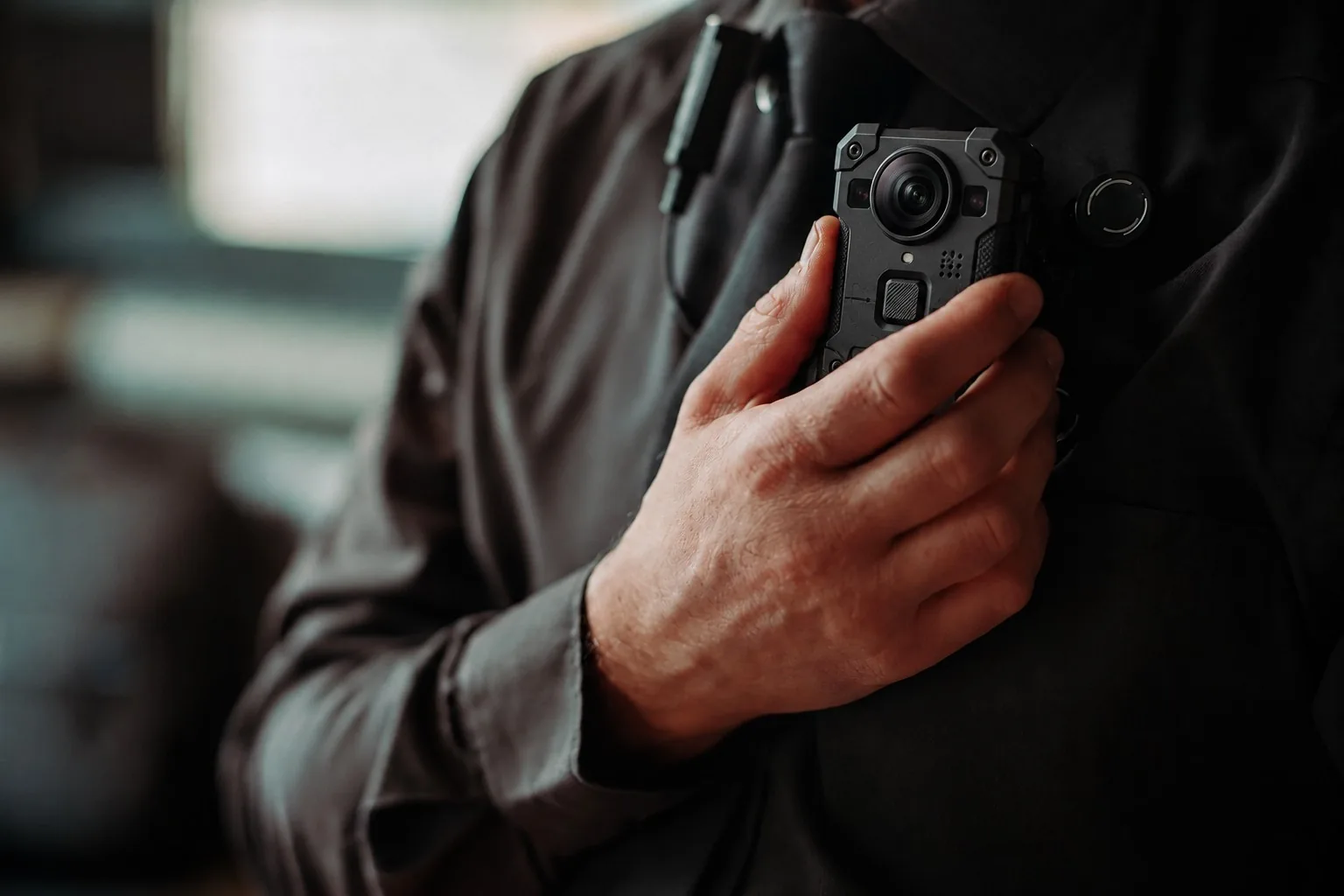
Body worn cameras supplied and configured for door staff, enforcement officers, lone workers and care teams. We write the deployment policy that goes with them and handle the redaction afterwards.
Plan the whole recording workflow.
Cameras, docking, storage and permissions need to work together. We plan the deployment around your wearers, shifts and the way recordings will be used.
1. Wear and record
Choose a camera and mounting position suited to the role.
2. Dock and transfer
Charging and upload follow the selected equipment workflow.
3. Manage the connection
A controller or supported platform manages transfer and configuration.
4. Store and review
Authorised users retrieve recordings under the agreed policy.
- 1
Wear and record
Choose a camera and mounting position suited to the role.
- 2
Dock and transfer
Charging and upload follow the selected equipment workflow.
- 3
Manage the connection
A controller or supported platform manages transfer and configuration.
- 4
Store and review
Authorised users retrieve recordings under the agreed policy.
Example system arrangement. The chosen model and recording platform determine the equipment, supported connections and expansion options.
Decisions that make the system useful.
Camera and wearer
Assess the mounting position, field of view, low-light performance, practical controls and the shift pattern. Battery endurance, pre-record buffers, GPS, live streaming and integration options depend on the selected model and configuration. Training includes fitting, recording and docking.
When to record
Agree the purpose and lawful basis, carry out a DPIA and document when recording is justified. Audio needs its own justification. Explain recording to people through suitable notices, indicators and announcements. Sensitive environments and continuous recording need particular consideration.
Access and retention
Set permissions for viewing, exporting and administration. Decide retention by purpose, with a documented process for retaining a relevant incident longer. Specify the available audit records, security controls, deletion and recovery arrangements for the chosen platform.
Deployment and aftercare
Door staff, enforcement teams, visiting workers and care services have different practical needs. Plan issue and return, charging, storage capacity, account changes and support. Review the policy with the people who wear and manage the cameras, and keep it current as work changes.
Read the ICO’s body-worn video guidance and discuss CCTV policy development or wider security procedures with us. The ICO compliance checker is a starting point for discussion, not a substitute for the deployment assessment.
From a request to the right disclosure.
Our video-redaction service works with body-worn footage as well as fixed-camera recordings. Agree what may be shared, then prepare the appropriate copy.
Start with the request.
Identify the incident, relevant time, requester and purpose. Establish the lawful disclosure scope and the rights of other people before preparing the material.
Preserve the original recording.
Prepare a separate working or disclosure copy. Visual masking and audio editing can protect information that should not be disclosed.
Consider everyone in the recording.
A clip may show bystanders, staff or sensitive surroundings. The required treatment follows the request and legal basis, rather than a rule to blur every face in every disclosure.
Review the copy before release.
Check the agreed edits and delivery requirements. Keep the original and a record of the authorised disclosure.
Body-worn cameras, answered.
Do we have to tell people we are recording?
Provide appropriate privacy information before deployment and make recording apparent in use. Depending on the circumstances, this can include clear signage, a visible indicator, an announcement and access to a privacy notice. Train wearers in the agreed approach. Routine covert recording should not be assumed to be justified.
How long should we keep body worn footage?
Set and document the shortest retention period needed for the stated purpose. There is no universal one-month rule. Where an incident needs to be retained, record the reason, authorised access and review or deletion arrangements. Configure and check the selected system against that policy.
Can we use the footage in a disciplinary against our own staff?
Telling staff in advance is important but does not, by itself, make every use lawful or fair. The purpose, lawful basis, necessity, proportionality, employment procedures and staff privacy information all need assessment. The deployment policy should explain any intended employment-related use and the relevant safeguards.
Should the cameras record audio?
Decide deliberately whether audio is necessary and proportionate for the purpose. It can capture sensitive conversations and people beyond the main incident. Where supported, separate audio and video controls help limit collection. If both must operate together, their combined use needs justification in the circumstances.
Can you redact the footage when we get a request?
Yes. Our CCTV video redaction service can work with body-worn footage, including visual masking and audio editing where required. First establish the request, lawful disclosure scope and any third-party rights, then prepare an appropriate copy while preserving the original. Not every authorised disclosure requires identical redaction. Call 028 7087 8077 to discuss the material and scope.
Discuss your deployment with us.
Tell us who will wear the cameras, where they work and how recordings need to be handled.
Advanced Overwatch is SSAIB certificated (NIRE127) specifically for Intruder Alarm Systems, Visual Surveillance Systems (VSS) and Access Control Systems. This does not establish separate product certification or legal compliance for a body-worn deployment.