
Quick Answer
Almost certainly not. The Information Commissioner’s Office says any capability to record audio should be switched off by default and used only in exceptional circumstances, and that continuous audio recording of workers is highly intrusive and unlikely to be justified. An employer who does record sound has to tell you, have a lawful basis, and complete a data protection impact assessment first.
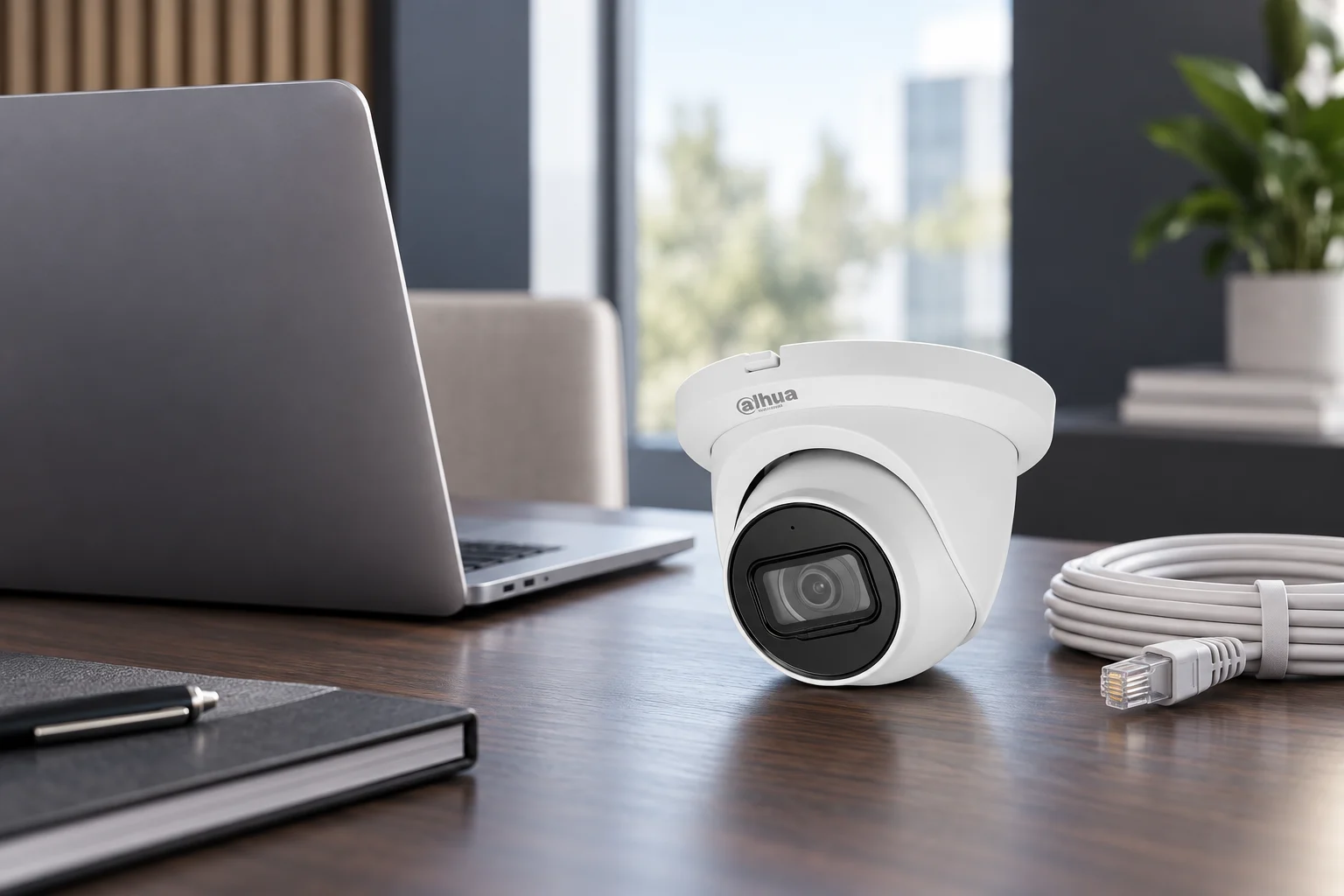
This question comes up more than any other on CCTV in the workplace, and the honest answer is that most people worrying about it are worrying about a microphone that is either not fitted or not switched on. The rules matter anyway, because when audio is enabled it is usually enabled by accident, and nobody has written down why.
This guide sets out how the law treats sound differently from pictures, what the regulator expects, what you should have been told, and where a worker in Northern Ireland goes if it has gone wrong.
Why sound is treated differently from pictures
A camera records what you did. A microphone records what you said, to whom, and in what tone. A recording of your voice is personal data in its own right, and conversations at work drift very quickly into things that have nothing to do with the employer: a phone call about a hospital appointment, a comment about a union meeting, a remark about somebody’s religion. Those are special category data, and capturing them by accident is one of the fastest ways for an ordinary CCTV system to become a serious data protection problem.
That is why the regulator treats an audio channel as a different decision from a camera, not as a feature that comes along with it. The Information Commissioner’s Office regulates data protection across the whole of the United Kingdom, Northern Ireland included, so the standard applied to a shop in Coleraine is the same one applied to a shop in Cardiff.
What the ICO actually says
The ICO’s guidance for employers on monitoring workers is unusually direct on this point:
- “Using audio recording, particularly where it is continuous, is considered more privacy intrusive than purely visual recording.”
- “You should switch off by default any capability to record audio. You should only use it in exceptional circumstances, for example by a trigger switch.”
- “Continuous audio and video recording can be highly intrusive and you are unlikely to be able to justify it in most circumstances.”
- “You are only likely to be justified in using continuous video or audio monitoring of workers in rare circumstances.”
- “You are unlikely to be able to justify covert monitoring in usual circumstances.”
The same guidance sets out what an employer must do if it goes ahead with video or audio monitoring: complete a data protection impact assessment, consider in that assessment why the monitoring is necessary for the intended purpose, inform workers about the extent and nature of the monitoring and why it is being carried out, and make anyone else caught by it, such as visitors or customers, aware of it as well. It also flags the right of access, and warns that third parties may need to be redacted from footage released in response to a request.
The ICO’s separate advice for smaller organisations puts it more plainly still: many cameras can record sound, but that does not mean you should, and because recording conversations can be particularly intrusive it is difficult to justify audio recording. Where a business does have a genuine need, the ICO suggests a system where the audio can be switched on in specific circumstances, for example where staff press a button, and says the business must make clear to people that its CCTV captures audio as well as images.
Where audio does and does not belong
| Situation | Is audio likely to be justified | What has to be in place |
|---|---|---|
| Continuous recording in an open plan office, workshop or shop floor | No | Nothing makes this routine. This is the case the ICO describes as rare, and most employers who find it switched on simply turn it off. |
| Rest rooms, changing areas, prayer rooms, toilets | No | Monitoring is expected to be confined to areas where expectations of privacy are low. These are not those areas. |
| A till, reception desk or ward where staff face abuse, audio on a trigger button | Possibly | A written purpose, a data protection impact assessment, signage that names audio, staff briefed, a short retention period, and the microphone silent until somebody presses the button. |
| Door entry or intercom conversation at the point of entry | Usually, for the call itself | A privacy notice, a retention period, and a device that captures the call rather than the room behind it. |
| Monitored CCTV where an operator speaks through a site speaker out of hours | Yes, as a deterrent | Document it as one way audio out to challenge an intruder. It is not staff monitoring and should not be recording the workplace. |
| Covert audio to investigate suspected criminal activity | Rarely | Senior authorisation, a written justification, a strict time limit, and evidence that less intrusive options were tried first. |
| A dashcam or camera in a company vehicle | Off by default | The ICO expects audio capability switched off by default on dashcams and triggered only in exceptional circumstances, for example if a passenger behaves in a threatening way. |
What you should have been told, and how to check
Transparency is the part employers get wrong most often, because a sign bought years ago says “CCTV in operation” and nothing else.
- The signage should say so. If sound is being recorded, that has to be clear to the people it captures, not buried in a policy nobody has read.
- The privacy notice should say so. Look at the staff privacy notice, the handbook or the induction pack for the purpose, the lawful basis, how long recordings are kept and who can view them.
- Ask a plain question. Is audio enabled on any camera, what is it for, and where is the data protection impact assessment. An employer with a legitimate arrangement will have all three answers ready.
- Do not read too much into the hardware. Plenty of cameras have a microphone port or a built in mic that has never been enabled at the recorder, and plenty of recorders have audio inputs with nothing connected. The presence of a microphone is not evidence that anything is being recorded.
- You can ask for a copy. A subject access request covers recordings of you, audio included. The employer may need to redact or remove other people before releasing it.
If it has gone wrong: the Northern Ireland route
Data protection is not devolved, so the regulator and the law are the same here as in the rest of the United Kingdom. Employment law is not, and that trips people up.
- The data protection complaint goes to the Information Commissioner’s Office, which covers Northern Ireland. Raise it with the employer first: the ICO expects you to have done so, and most audio problems are solved the moment somebody senior realises the microphones are live.
- An employment claim in Northern Ireland goes to an Industrial Tribunal, not an Employment Tribunal as it would in England, Wales or Scotland.
- Early conciliation here is handled by the Labour Relations Agency rather than Acas, a requirement introduced in Northern Ireland in 2020.
- There is no Employment Appeal Tribunal in Northern Ireland. Appeals go to the Northern Ireland Court of Appeal.
How a tribunal treats evidence that came from monitoring is a legal question for an adviser, not a security company. What we can say is the practical part: an employer who cannot produce a purpose, a lawful basis, a data protection impact assessment and evidence that staff were told is in a much weaker position than one who can.
A checklist for employers in Northern Ireland
Most of the audio recording we find on commercial sites was never a decision. It arrived switched on, and nobody looked.
- Audit every camera and every recorder, and write down which ones have audio capability and which have it enabled.
- Switch audio off at the camera and at the recorder unless you can say in one sentence why it is on.
- Where you keep it, write the purpose down before you turn it on, and complete a data protection impact assessment.
- Move to a trigger rather than continuous capture wherever the purpose allows it.
- Update the signage so it names audio, and update the staff privacy notice to match.
- Set a retention period, and make sure the recorder actually enforces it rather than overwriting whenever the disk fills.
- Restrict playback of audio to named people and log who listened.
- Make covert monitoring a senior decision with a written authorisation, never a shift decision.
- Review it whenever the premises, the layout or the work changes, because a camera that was pointed at a loading bay in 2022 may now be pointed at a desk.
How we handle audio on the systems we install
Most of the systems we design have the microphones disabled at the camera, and we say so at handover rather than leaving it as a setting somebody discovers later. Where a client asks for audio, we ask for the purpose and the lawful basis in writing first, or we advise against it, because an audio channel nobody can justify puts the value of the rest of the footage at risk.
Two related points come up often. On covert deployments we work video only unless there is an exceptional written justification. And where footage has to be handed to a third party, our video redaction service can redact or remove the audio track as well as blurring faces, so a disclosure does not release conversations that were never the point of the request.
Frequently Asked Questions
Is it illegal to record sound on CCTV in the UK?
It is not automatically illegal, but it is hard to justify. Recording sound is processing personal data, so it needs a lawful basis, a documented purpose, clear notice to the people captured and, in a workplace, a data protection impact assessment. The ICO’s position is that audio capability should be switched off by default and used only in exceptional circumstances, so a system recording conversations continuously is very likely to be non compliant rather than merely unwise.
Do you legally have to tell people you have CCTV?
Yes. People have to know that surveillance is taking place, who is doing it and why, which in practice means clear signage plus fuller privacy information behind it. If the system records sound as well as pictures, the ICO says you must make that clear too. A sign that says only “CCTV in operation” is not enough where audio is being captured.
Can my boss legally watch me on CCTV?
Watching is easier to justify than listening, but it is not unlimited. Monitoring has to be necessary for a stated purpose, proportionate to it, targeted at areas of particular risk, confined to places where expectations of privacy are low, and disclosed to staff. Continuous monitoring of individual workers, whether by camera or microphone, is something the ICO expects to see only in rare circumstances.
Is it illegal for my boss to watch me on CCTV from home?
Remote viewing of a workplace system is not unlawful in itself, and it is normal for an owner to check a premises out of hours. What matters is the purpose and the discipline around it: the same lawful basis, the same limits on where cameras point, a record of who has access, and no drift into watching a named individual through the working day because it is easy to do from a phone.
What are the laws on CCTV cameras in the workplace?
The UK GDPR and the Data Protection Act 2018 apply, interpreted through the ICO’s video surveillance guidance and its guidance on monitoring workers. In outline: a documented purpose, a lawful basis, a data protection impact assessment where the monitoring is high risk, notice to staff and to visitors, cameras targeted rather than blanket, a defined retention period, restricted access to recordings, and the right of individuals to ask for a copy of what has been recorded of them.
Summary
Sound is a separate decision from pictures, and it should be switched off unless somebody can write down why it is on. If you are a worker, ask what is recorded and where the assessment is, and take a data protection complaint to the ICO and an employment claim to an Industrial Tribunal with early conciliation through the Labour Relations Agency. If you are an employer, audit the microphones, disable them by default, and keep audio for the narrow trigger based cases where you can defend it.
Related reading
- Service page: CCTV installation in Northern Ireland
- Related guide: CCTV regulations in Northern Ireland
- Related guide: Wired vs wireless CCTV
- Covert surveillance and when it is proportionate: Covert CCTV
- Redacting faces and audio before disclosure: CCTV video redaction
- Analytics and what they can and cannot hear: AI CCTV analytics
- All of our guides: Knowledge Base