
Most underperforming business CCTV we are asked to look at has the same history. Cameras went up where the cabling was easiest, nobody wrote down what each camera was for, and the first time the footage really mattered it was not good enough. Specifying a system properly is not complicated, but it has to happen in the right order. Here is what we work through with businesses across Northern Ireland.
Give every camera a job
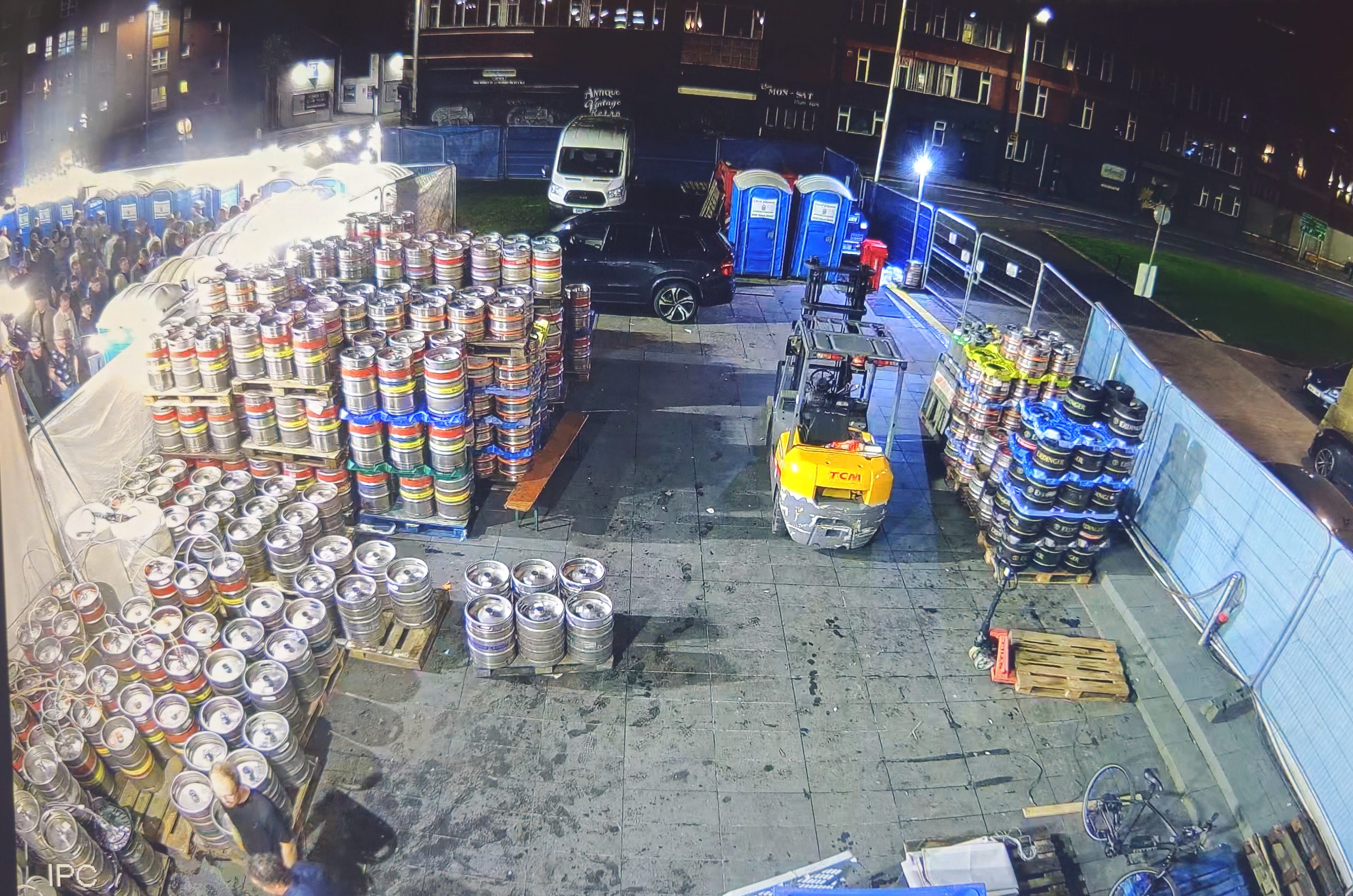
Placement comes before products. Decide what each camera must achieve, then pick the position and lens that achieve it. Entrances and exits deserve identification shots at face height, close enough that a person fills a good portion of the frame. Tills, counters and offices where cash is handled come next, then loading bays, yards and anywhere plant, fuel or stock sits outside. Wider views across a car park or perimeter are for watching movement, not identifying people, and it is a mistake to expect one camera to do both. Two faults we correct constantly: cameras mounted so high they record the tops of heads, and cameras pointed at a bright doorway so everyone who walks in is a silhouette. Shoot into the building rather than out of it, or specify a camera with proper wide dynamic range.
Retention and GDPR
Footage of staff, customers and passers-by is personal data, and running CCTV at a business brings obligations. The basics: pay the ICO data protection fee unless you are exempt, put up signage, name someone responsible for the system, set and document a retention period based on why the footage is needed, and be able to answer a subject access request when someone asks for footage of themselves. Keep coverage of neighbouring property and public footpaths to the minimum practical. There is a fuller walkthrough on our CCTV compliance page. When we specify a system, the retention period drives the storage calculation, rather than storage being whatever the recorder happened to ship with.
Monitored or recorded-only
Recorded CCTV gives you footage to review after an incident. A compatible system can also send alerts, depending on how it is configured. With an agreed monitored CCTV service, events can be assessed while they are happening. Advanced Overwatch operates its own CCTV monitoring centre. The response, including any audio challenge or escalation, depends on the equipment and agreed response plan. Separately, intruder alarm monitoring is provided through our monitoring partner’s NSI Gold-accredited ARC. We assess whether monitoring is appropriate for the premises during the survey.
Keep cameras off the office network
IP cameras are computers, and cheap ones are poorly maintained computers. They belong on their own switch or VLAN, isolated from the network your business actually runs on, with default passwords changed and firmware kept current. Remote viewing should go through the secure service built into the recorder, not a port forwarded straight through your router. Ask any installer how they intend to handle this. A shrug is a useful warning.
What a proper survey covers
Expect the surveyor to walk the whole site, ask what problems you are trying to solve, and note lighting, ideally considering how the site looks after dark as well as in daylight. What you should get back: a coverage plan that states the purpose of every camera, a camera schedule, cable routes and the recorder location, a storage calculation built from your retention period and recording settings, the network arrangement, the compliance points above, and a written specification you can hold the installation to. If the survey is a quick look round and a figure on the spot, the footage will eventually show it.
Advanced Overwatch designs, installs, maintains and monitors business CCTV across Northern Ireland. Advanced Overwatch is SSAIB certificated (NIRE127) specifically for Intruder Alarm Systems, Visual Surveillance Systems (VSS) and Access Control Systems. Call 028 7087 8077 to arrange a survey.
Explore our CCTV installation service or CCTV installation in Belfast.