
A CCTV camera survey is a professional assessment of your property, carried out by a qualified security engineer before any equipment is specified or installed. During the survey, the installer walks your site, maps out vulnerable areas, assesses coverage requirements, and designs a system around your property. It is the foundation of every effective CCTV installation, and skipping it is one of the most common reasons security systems underperform. For homes and businesses in Northern Ireland, a thorough survey makes the difference between a system that genuinely protects and one that merely looks the part.
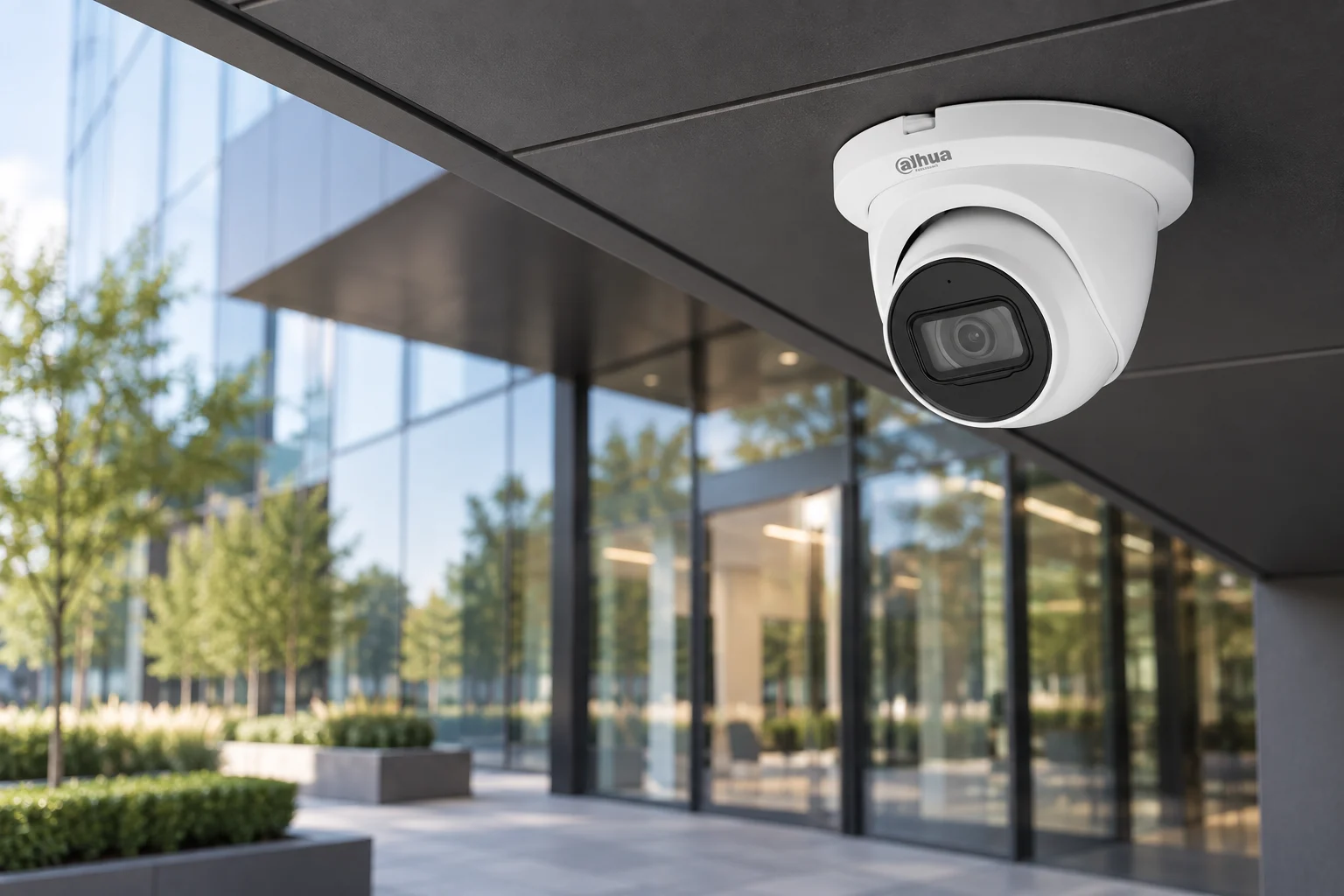
What Is a CCTV Camera Survey?
A CCTV camera survey, also called a site survey, is a pre-installation visit from a trained security engineer. Rather than selling you a pre-packaged system, the engineer treats your property as a unique project. They look at what you are trying to protect, where the vulnerabilities are, and how those vulnerabilities can be addressed with the right cameras in the right positions.
The survey produces a system design for that property: camera types, positions, cable routes, recording setup and the data protection points. Without this step, even high-quality cameras can be positioned to miss key areas, set at the wrong resolution, or connected to a recorder that fills up in three days. The survey is what turns a collection of hardware into a system that actually works.
What Does a Professional CCTV Surveyor Assess?
A thorough CCTV survey covers several distinct areas, each of which shapes the final system design.
Entry and Exit Points
Every door, gate, ground-floor window, loading bay, or vehicle access point is a potential vulnerability. The surveyor identifies all of these and determines which require camera coverage and at what resolution. For many commercial properties in Northern Ireland, the perimeter alone can span hundreds of metres of fencing, multiple vehicle gates, and pedestrian access points that need to be monitored simultaneously.
Sight Lines, Coverage Angles, and Obstructions
Camera position is not simply a matter of pointing a lens in the right direction. Trees, parked vehicles, structural pillars, signage, and seasonal changes in foliage can all block a camera’s effective field of view. The surveyor assesses these obstructions at the time of the visit and accounts for how they may change throughout the year. In Northern Ireland, deciduous trees that present no problem in winter can completely block a camera’s view of a car park by July.
The angle of coverage also matters significantly. A wide-angle lens covering a broad area provides less detail than a narrower field of view focused on a specific point such as a till, an entrance door, or a cash handling area. The survey determines the right lens configuration for each camera position based on what you need to see.
Lighting Conditions and Night Vision Requirements
Northern Ireland has some of the shortest winter daylight hours in the UK. By late November, it is dark by 3:30 PM. Any property with security concerns must have a CCTV system that performs reliably in darkness, which means the surveyor assesses available artificial lighting, identifies dark zones, and specifies cameras with appropriate infrared (IR) or low-light capability.
Not every area needs the same night vision range. A camera covering a short corridor needs far less IR range than one monitoring a large car park or a rural yard. Getting this wrong means cameras that appear to be working but are producing unusable footage at night.
Power Supply and Cable Routing
Every camera needs a power source. The surveyor identifies where power can be drawn from, whether existing cabling infrastructure can be used, and how cameras will be wired back to the recording unit. For external cameras, this includes assessing weatherproofing requirements and the most practical routes for cabling to avoid damage and aesthetic intrusion.
For many commercial properties, Power over Ethernet (PoE) technology simplifies installation by running power and data through a single network cable. The surveyor assesses whether PoE is suitable for each camera position and what switching infrastructure is required.
Network Infrastructure and Recording Storage
Modern IP CCTV systems store footage on a Network Video Recorder (NVR) or, in some cases, to cloud storage. The surveyor calculates the storage requirement based on the number of cameras, chosen resolution, frame rate, and how many days of footage need to be retained. This is not a simple sum: a system with eight cameras recording at 4K around the clock will fill storage far faster than a motion-triggered HD system covering four zones.
The surveyor also looks at your existing network and at the broadband, which has to carry remote viewing of live and recorded footage. For businesses with multiple sites or managers who need to check cameras remotely, this part of the survey is critical.
Data Protection and UK GDPR Compliance
Any CCTV system that captures images of identifiable individuals is covered by the UK General Data Protection Regulation (UK GDPR) and the Data Protection Act 2018. This applies to almost every commercial CCTV installation and to any residential system that captures footage of public areas such as a pavement or shared driveway.
A professional surveyor considers compliance as part of the system design. This means identifying where signage must be positioned to inform people they are being recorded, avoiding areas where filming is prohibited (such as toilets, changing rooms, or private areas where individuals have a reasonable expectation of privacy), and understanding what retention period is appropriate for your footage.
The Information Commissioner’s Office (ICO) provides guidance on the lawful operation of CCTV systems in the UK. A certified installer will incorporate these requirements into the survey and system design, helping you avoid the reputational and regulatory consequences of non-compliance.
How Long Does a CCTV Survey Take?
For a standard residential property, a CCTV survey typically takes between 30 and 60 minutes. A semi-detached or detached home with a front door, back garden, and driveway can be assessed and planned in a single visit.
Commercial properties take longer. A retail unit or small office may need 60 to 90 minutes. A warehouse, industrial unit, or multi-entrance commercial building can require two to three hours or more, particularly if the perimeter is large or the internal layout is complex. Large sites or those with specific security requirements, such as schools, healthcare facilities, or critical infrastructure, may require a full-day survey with documentation and risk assessment as part of the process.
What Should You Receive After a CCTV Survey?
A professional CCTV survey should produce more than a verbal quote. At minimum, you should receive a written system design or camera placement plan, a specification of the recommended equipment, a written quotation with clear pricing, and an indication of the installation timeline.
For commercial properties, a reputable installer will also provide a brief summary of how the system addresses your key security concerns and how it aligns with UK GDPR requirements. If your insurance policy requires certified installation, the installer should be able to confirm their certification status in writing. Advanced Overwatch holds SSAIB certification under reference NIRE127 and ISO 9001, 14001, 27001, and 45001 certifications, which are documented and available on request.
Why an Online Quote Is Not a Substitute for a Physical Survey
Many CCTV retailers and some national companies offer instant online quotation tools. These tools can be useful for getting a broad sense of cost, but they cannot replace a physical survey. An online quote does not know that your car park is in a depression that creates night-time shadows, that your main entrance faces west into afternoon glare, or that your broadband connection cannot support remote viewing at the resolution you want.
The result of installing without a survey is often a system that works technically but fails practically: cameras positioned to miss the actual entry point used by intruders, resolution set too low to identify faces, or storage that runs out after 48 hours and starts overwriting before anyone realises. A physical survey takes the time to get this right before any equipment is ordered.
Does a CCTV Survey Cost Anything?
Most professional CCTV installers in Northern Ireland offer free site surveys with no obligation to proceed. This is standard practice for certified companies, as the survey is part of the process of designing the right system, not an additional service charged separately.
Be cautious of any company that charges significantly for a survey upfront, particularly if the fee is non-refundable. Equally, be cautious of companies that will quote without visiting your site. Both approaches suggest shortcuts that are likely to continue into the installation itself.
Choosing a Certified CCTV Installer in Northern Ireland
The quality of your CCTV survey depends directly on the knowledge and training of the engineer carrying it out. SSAIB certificated companies are subject to regular independent inspection of their survey and installation processes. This means the engineer visiting your property has met an independently verified competence standard, not just completed a manufacturer’s product training day.
Advanced Overwatch is SSAIB certificated (NIRE127) and has been installing security systems across Northern Ireland for businesses, homeowners, landlords, schools, and industrial facilities. Our engineers cover Belfast, Derry/Londonderry, Coleraine, Newry, Lisburn, Antrim, Ballymena, Omagh, Dungannon, and all surrounding areas. Every installation begins with a free, no-obligation site survey.
To book your CCTV survey, call us on 028 7087 8077 or get in touch through our contact page.
Advanced Overwatch is SSAIB certificated (NIRE127) specifically for Intruder Alarm Systems, Visual Surveillance Systems (VSS) and Access Control Systems. Advanced Overwatch is certified to ISO 9001, ISO 14001, ISO 27001 and ISO 45001.
Related Questions
What questions should I ask during a CCTV camera survey?
When a CCTV engineer visits your property, use the survey as an opportunity to understand exactly what you are buying. Ask what camera resolution they are recommending and why. Ask how many days of footage the system will store and whether that can be extended. Ask how the system performs at night and whether any additional lighting is recommended. Ask about remote viewing options and whether you can monitor the system from your phone. Ask what happens if a camera fails and whether there is a maintenance or support option available. Finally, ask the engineer to walk you through how the system addresses each of your specific security concerns, so you can evaluate whether the design truly fits your needs.
How often should a CCTV system be re-surveyed?
A CCTV system does not need to be re-surveyed on a fixed schedule, but there are several situations that warrant a fresh assessment. If your property layout changes, such as an extension, new access gates, or a change in tenancy, the existing camera positions may no longer provide adequate coverage. If the business changes, say daytime-only hours become 24-hour working, the recording and monitoring needs change with it. If you have experienced a security incident that the existing system failed to capture, that is a clear indicator that coverage gaps exist. As a general guide, a review of your camera positions and system specification every three to five years is reasonable for most commercial premises.
Can a CCTV survey identify whether my current system is adequate?
Yes. Many CCTV surveys are carried out not for new installations but to assess whether an existing system is still fit for purpose. An engineer can review your current camera positions, test image quality in different lighting conditions, check storage and retention settings, and identify any compliance issues with your UK GDPR obligations. This type of assessment is particularly useful if your existing system was installed several years ago before the shift to high-definition IP cameras became standard, or if you have inherited a system when taking over a property and are not sure what you have. Advanced Overwatch can survey existing systems and provide an honest assessment of whether they meet your needs.
How many cameras will I need before a CCTV survey is done?
You cannot accurately determine the number of cameras needed without a physical site survey. Camera count depends on your property layout, the coverage zones required, chosen camera resolution, and field of view. A surveyor will assess sight lines, obstructions, lighting conditions, and your specific security priorities before recommending a camera count. Online calculators and generic package deals often result in either under-coverage or unnecessary cameras. A reputable SSAIB certificated installer will not quote a fixed number until they have walked your site.
Can I do my own CCTV survey before calling an installer?
You can do a basic walkthrough to identify your main concerns, such as entry points you want covered, areas with existing lighting, and where you would like cameras positioned. This preparation helps you have a more focused conversation with your installer. However, a professional CCTV survey goes much further: the engineer assesses camera field of view, lens types, IR night vision range, cable routing, storage calculations, network capacity, and UK GDPR compliance requirements. Self-assessment is a useful starting point but is not a substitute for a professional survey, particularly for commercial or larger residential properties.
Does a CCTV survey affect my insurance premium?
A professionally installed CCTV system can positively influence your insurance assessment, but the survey itself is simply the planning stage before installation. What insurers typically care about is whether the system was installed by a certified company, whether it meets the specification required by your policy, and whether it covers the entry points and zones stipulated. Some commercial insurance policies require SSAIB or NSI-certified installation as a condition of cover. Your insurer or broker can confirm whether your policy has specific requirements before you proceed with installation.
Standards Explained
UK GDPR (UK General Data Protection Regulation): The framework of data protection law that applies in the United Kingdom following Brexit. It is implemented through the Data Protection Act 2018 and closely mirrors the EU GDPR in most respects. CCTV systems that capture footage of identifiable individuals are subject to UK GDPR. Operators must have a lawful basis for processing the footage (typically legitimate interests for commercial security), must display signage informing people they are being recorded, must not retain footage longer than is necessary for the stated purpose, and must be able to respond to data subject access requests. Failure to comply can result in enforcement action by the Information Commissioner’s Office.
Data Protection Act 2018 (DPA 2018): The UK Act of Parliament that implements the UK GDPR into domestic law and sets out additional rules around certain categories of data. For CCTV operators, the DPA 2018 is the primary legislative reference for data protection obligations. It also establishes the role and powers of the Information Commissioner’s Office as the UK supervisory authority.
ICO (Information Commissioner’s Office): The independent regulatory body responsible for upholding data protection law in the UK, including oversight of CCTV use. The ICO publishes practical guidance for organisations operating CCTV, covering lawful basis, signage, retention, access requests, and data protection impact assessments. All businesses in Northern Ireland operating CCTV systems are subject to ICO oversight. Guidance is available at ico.org.uk.
SSAIB (Security Systems and Alarms Inspection Board): A UKAS-accredited third-party certification body that runs separate certification schemes for electronic security companies. SSAIB independently inspects certified companies on a regular basis to verify their technical competence, quality of workmanship, and compliance with relevant codes of practice. Holding SSAIB certification is a recognised indicator of professional standards and is required by many insurers as a condition of cover. Advanced Overwatch is SSAIB certificated (NIRE127) specifically for Intruder Alarm Systems, Visual Surveillance Systems (VSS) and Access Control Systems. Our Engineers, subcontractors and Fire Risk Assessors are highly experienced, thoroughly understanding commercial and residential fire detection and alarm requirements.