
A complete home security system in Northern Ireland usually combines four things: a graded intruder alarm, CCTV cameras, professional monitoring through a 24/7 Alarm Receiving Centre, and, increasingly, smart access control such as a video doorbell or smart lock.
The right mix depends on your property, your risk, and whether you want police response.
In this article
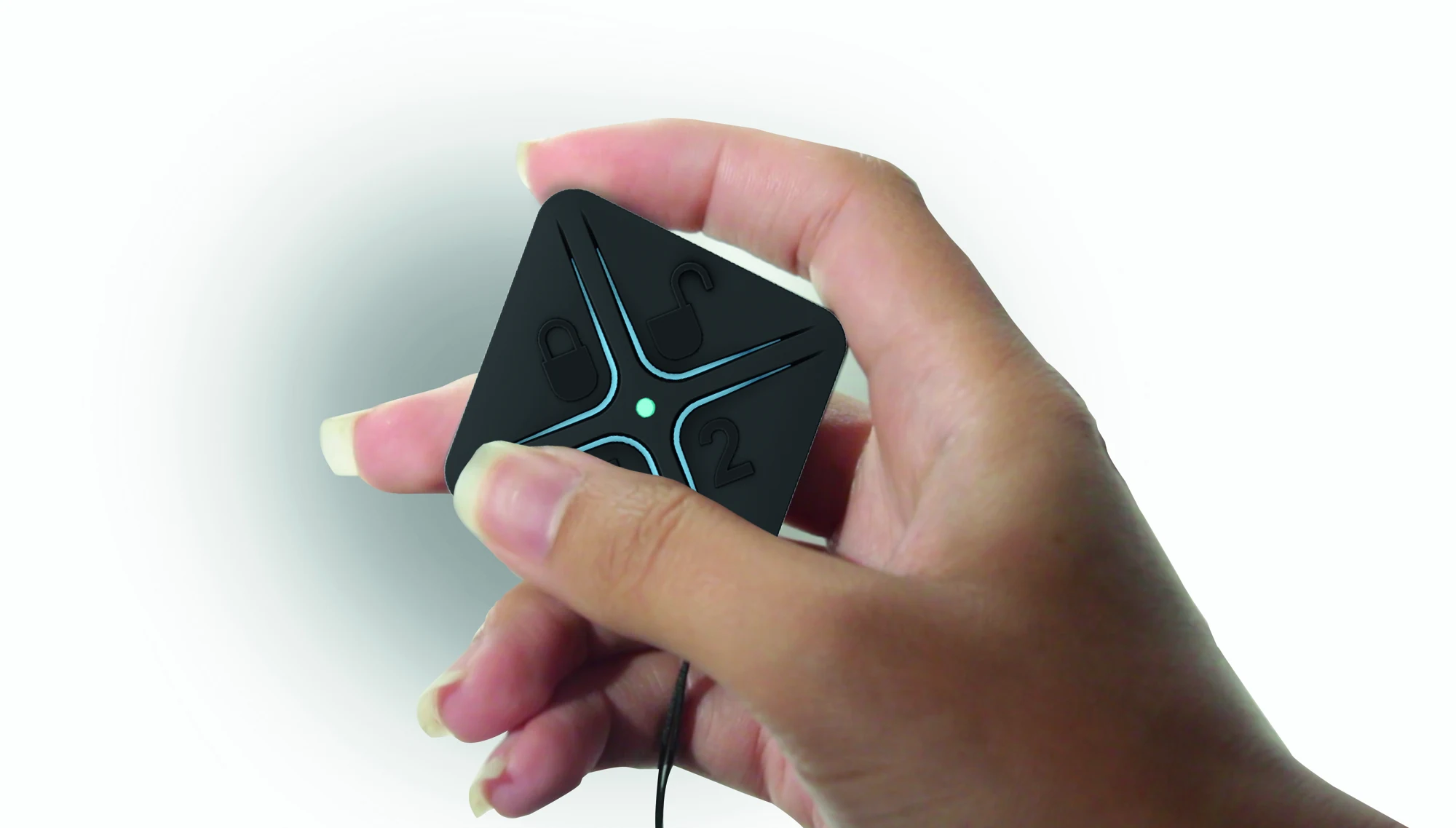
For most homes the foundation is a professionally installed intruder alarm built to BS EN 50131, ideally Grade 2, with the option to add cameras and monitoring on top. A professionally installed and certified system also unlocks two things a DIY kit cannot: eligibility for a PSNI police response, and recognition by many home insurers.
This guide explains what goes into a home security system, what professional installation and certification actually give you, and what matters specifically for properties across Belfast and the rest of Northern Ireland. It is written so you can decide what you need before you ever pick up the phone.
Why choose a professional home security system?
You can buy a self-fit alarm or a single Wi-Fi camera from a high-street retailer in an afternoon. For a small flat with low risk, that may be enough. The gap opens up when you want your system to do more than make a noise.
A professionally installed system is designed for your property, certified to a recognised standard, and supported after the day it goes in. That matters for three practical reasons. First, only a certified installer can register your alarm with the Police Service of Northern Ireland for a verified response, which a DIY kit cannot do. Second, many home insurers recognise professionally installed graded alarms and may offer a premium reduction or require one for higher-value cover. Third, a designed system covers the real entry points and blind spots of your home rather than the few places a box of sensors happens to reach.
The trade-off is cost and lead time. A professional system costs more up front than a self-fit kit and takes a survey and an install day rather than an evening. What you get in return is a system that works when it matters, paperwork your insurer will accept, and a company you can call when something needs attention.
| Feature | DIY / self-fit kit | Professionally installed system |
|---|---|---|
| Designed for your property | No, generic coverage | Yes, surveyed and specified |
| Certified to BS EN 50131 | No | Yes, to the right grade |
| Eligible for PSNI police response (URN) | No | Yes, via certified installer |
| Recognised by home insurers | Rarely | Commonly, with certificate |
| 24/7 ARC monitoring | Usually self-monitored only | Available with keyholder or police escalation |
| Ongoing maintenance and support | None | Included and certified |
The point is not that every home needs the most expensive system. It is that you should choose with the full picture in front of you, rather than discovering after a break-in that your alarm never qualified for a police response or an insurance payout.
What does a home security system include?
Most home systems are built from four building blocks. You do not need all of them, but it helps to understand how they fit together.
Intruder alarm systems
The intruder alarm is the core of home security. A modern system uses motion detectors, door and window contacts, and a control panel that can signal an alert. Quality matters here, and it is measured by a standard.
The relevant standard is BS EN 50131, the European standard for intruder and hold-up alarm systems, adopted as a British Standard. Systems are rated by security grade from 1 to 4. Grade 1 is very low risk, Grade 2 is the typical level for a domestic property, Grade 3 suits higher-value homes or those at greater risk, and Grade 4 is reserved for high-risk premises. Most Northern Ireland homes are well served by a Grade 2 system. The grade is not a marketing label, it sets the standard for the equipment, the detection, and how the system resists tampering.
CCTV and IP cameras
CCTV deters intruders, records what happens, and lets you check on your home from your phone. Modern systems use IP (network) cameras recording to a network video recorder, or NVR, on site. Older analogue cameras record to a digital video recorder, or DVR. For a home, a small number of well-placed high-resolution cameras covering entrances, driveways, and rear access usually beats a large number of poorly sited ones.
Home CCTV captures images of identifiable people, which makes it personal data. Where footage extends beyond your own boundary, data protection duties under UK GDPR can apply. We design and install systems with that in mind and explain your responsibilities in plain terms.
24/7 monitored response (ARC)
An alarm that only sounds locally relies on a neighbour hearing it and acting. A monitored alarm sends its signal to an Alarm Receiving Centre (ARC), a facility staffed around the clock. When your alarm triggers, the ARC verifies the activation and follows an agreed plan: contacting you, calling a nominated keyholder, or requesting a police response where the system qualifies. Monitoring is what turns an alarm from a noise into a response.
Access control and smart locks
For homes, access control usually means a video doorbell, a smart lock, or an electric gate. These let you see and speak to callers, grant access remotely, and keep a record of comings and goings. They integrate neatly with a wider system so you manage everything from one app.
How the installation process works
A good installation is a process, not a single visit. The Verisure-style promise of a system fitted within hours sounds attractive, but a system designed in a rush is a system designed around the kit on the van rather than your home.
- Survey. An engineer visits, walks the property, and identifies entry points, blind spots, and the right grade for your risk. This is free and carries no obligation.
- Design and quote. We specify the equipment, the camera positions, and the monitoring plan, and set out the costs clearly with no hidden subscriptions you did not agree to.
- Installation. A typical home system is installed in a day. Because we surveyed first, cabling and equipment are right the first time, which avoids repeat visits.
- Handover. We commission the system, test every device, show you how to use it, and provide the certification your insurer may ask for.
- Ongoing support. Alarms need periodic maintenance to stay compliant and reliable. We support the system after handover rather than leaving you with a box on the wall.
SSAIB certification and why it matters for your insurance
This is where professional installation earns its keep. In the UK, intruder alarm installers are certified by a UKAS-accredited body. The two main schemes are the SSAIB (Security Systems and Alarms Inspection Board) and the NSI (National Security Inspectorate), the latter offering its well-known NSI Gold standard. Both sit under UKAS oversight and both are accepted by insurers and police.
Advanced Overwatch is SSAIB certificated (NIRE127) specifically for Intruder Alarm Systems, Visual Surveillance Systems (VSS) and Access Control Systems. We are not an NSI company, the two are separate, equivalent schemes, and being certified by one recognised body is what counts.
Certification matters to you in two concrete ways:
- Police response. The PSNI will only attend an alarm registered against a Unique Reference Number (URN), and a URN is issued through a certified installer. As an SSAIB certificated company, we can apply for a URN on your behalf so your alarm qualifies for a police response. To keep that response, the system must generate a confirmed alarm under BS 8243, which uses two independent detections to filter out false alarms before police are called.
- Insurance. Many UK home insurers recognise professionally installed, graded alarms from a certified installer. Some offer a premium reduction, and some require a certified system as a condition of cover on higher-value homes. A self-fit kit rarely satisfies these conditions because there is no certification behind it.
One point on monitoring staff: alarm installation engineers do not require an SIA licence, and we do not imply otherwise. SIA licensing covers manned guarding roles. Your alarm is monitored by a dedicated ARC, which is a separate regulated activity.
Home security for Northern Ireland properties
Northern Ireland homes are not all the same, and a good system reflects that. The PSNI publishes recorded crime statistics, including domestic burglary, and these confirm that residential break-ins remain a real concern across both urban and rural areas. Government guidance from the National Protective Security Authority (NPSA) sets out the same layered approach professionals use: deter, detect, delay, and respond.
A few local considerations shape the design:
- Rural and isolated properties, common across Tyrone, Fermanagh, and the Sperrins, benefit most from monitored alarms and CCTV, because a local-only siren may be heard by no one. Reliable signalling matters here, which is why we favour dual-path signalling, using both broadband and a mobile (GSM) connection so the alarm can still call for help if one path fails or is cut.
- Urban and suburban homes in and around Belfast, Derry, Lisburn, and Coleraine often face opportunistic entry through rear access and outbuildings, which a designed camera layout addresses directly.
- Terraced and semi-detached homes share walls and access routes with neighbours, so sensor placement and external lighting need care.
- Listed and older buildings need installation that respects the fabric of the property, which a wireless graded system can often achieve with minimal disruption.
Whatever the property, the principle is the same: a system designed around your home, certified to a recognised standard, and monitored so a real activation gets a real response. Because we are based in Coleraine and cover the whole of Northern Ireland, the engineer who surveys your home is local, not a national call centre routing a job to whoever is nearest on the day.
Related Questions
Does a professionally installed alarm reduce my home insurance?
Will the PSNI respond to my home alarm?
How long does a home security installation take?
Standards Explained
BS EN 50131
Alarm security grades (Grade 1 to 4)
BS 8243
Alarm Receiving Centre (ARC)
Unique Reference Number (URN)
SSAIB (Security Systems and Alarms Inspection Board)
NSI (National Security Inspectorate)
Dual-path signalling
Get a free home security survey
The fastest way to find out what your home needs is a free, no-obligation survey. An engineer assesses your property, recommends the right grade and equipment, and sets out the costs clearly, with no pressure and no hidden subscriptions. Whether you want a simple graded alarm or a fully monitored alarm, CCTV, and access control package, we design it around your home and support it long after installation.
Call Advanced Overwatch on 028 7087 8077 or visit our contact page to book your free home security survey. We cover Belfast and all of Northern Ireland.
Advanced Overwatch is SSAIB certificated (NIRE127) specifically for Intruder Alarm Systems, Visual Surveillance Systems (VSS) and Access Control Systems. Advanced Overwatch is certified to ISO 9001, ISO 14001, ISO 27001 and ISO 45001.