
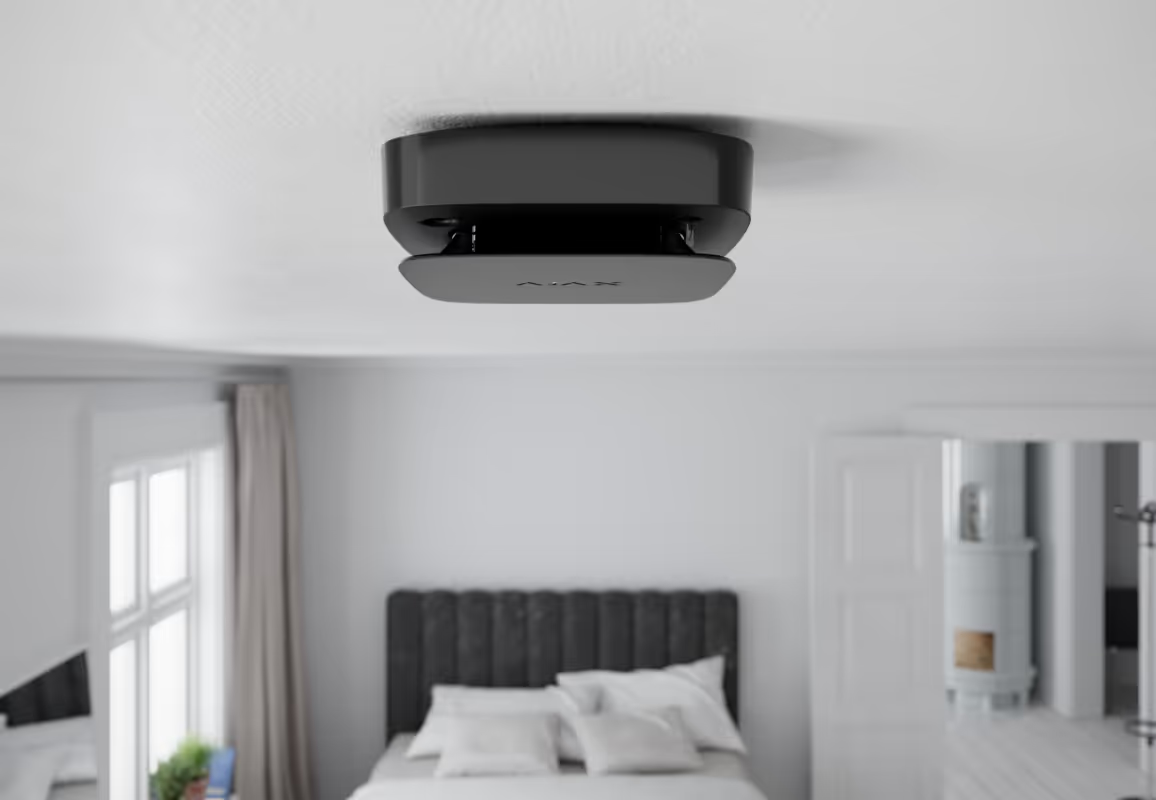
Home Fire Alarms in Northern Ireland
Interlinked smoke, heat and carbon monoxide detection for houses across Northern Ireland, installed to BS 5839-6.
Fitted by our own engineers, tested at handover, and monitored 24 hours a day by an NSI Gold certified Alarm Receiving Centre if you want it watched overnight.
Thousands of premises secured since 2017
Three hazards.
The right detection.
A home needs detection suited to its rooms, occupants and escape routes. Smoke, heat and carbon monoxide alarms have different jobs.
- SmokeDetect smoke in the appropriate circulation spaces and rooms.
- HeatSuitable for kitchens and other areas specified in the design. It detects heat, not carbon monoxide.
- Carbon monoxideDetect CO from relevant fuel-burning risks. A smoke alarm alone cannot do this.
Choose devices with a supported interconnection method. An interconnected warning must still be suitable for the people who need to hear or receive it, including anyone with hearing loss.
Grade describes the system’s power and arrangement. For example, D1 has mains power with tamper-proof standby batteries; D2 uses replaceable standby batteries. A panel system is a different design.
Category describes the extent of fire detection. LD3 covers circulation spaces forming escape routes, LD2 adds specified higher-risk rooms, and LD1 provides broader coverage. We assess the required design under BS 5839-6:2019+A1:2020 and the property’s applicable requirements.
Start with your property.
Choose the situation closest to yours to see what to discuss at a survey.
Which property are you arranging protection for?
This guide prepares the conversation. It does not select an alarm count or certify a design.
Your own home
Plan around your home and household.
Bring the layout, any building-work plans and details of existing alarms. We review coverage, power, interconnection and whether additional warning devices are needed. New building work and existing homes may have different applicable requirements.
Keep existing required mains alarms in service until a suitable replacement is arranged. Wireless interconnection can reduce cabling where the selected devices and site support it.
The survey confirms the applicable requirements, equipment, siting, warnings and handover information.
A private rental
Check the Northern Ireland rental requirements.
The 2024 rules include smoke detection in the main daytime living room and circulation spaces, heat detection in each kitchen, and CO detection for qualifying combustion appliances or flues. Layout exceptions and other requirements matter.
Smoke and heat alarms must interlink; CO alarms need not interlink under these regulations. Suitable sealed long-life battery options are permitted in some circumstances, but existing mains alarms required by Building Regulations must be replaced with mains alarms.
The survey confirms the applicable requirements, equipment, siting, warnings and handover information.
An HMO or shared building
Start with the property’s assessment.
HMO licence conditions, the fire risk assessment, layout and management arrangements affect the design. A house converted to several households must not simply be treated as an ordinary owner-occupied home.
Bring the current assessment and licence conditions. We identify the required system and documentation for the property, including any shared areas, rather than selecting a grade from the number of bedrooms alone.
The survey confirms the applicable requirements, equipment, siting, warnings and handover information.
Interlinked locally. Monitored when agreed.
Compatible fire detection can form part of a properly designed combined intruder and fire system. Fire protection remains active when the intruder alarm is unset. A phone notification alone is not professional monitoring.
Under an agreed monitoring service, fire and intruder signals go to our monitoring partner’s NSI Gold certified Alarm Receiving Centre (ARC), following the response plan. This is separate from our own 24-hour CCTV Monitoring Control Room. Read about monitoring.
Leave with the information you need.
Installation includes commissioning and the appropriate handover records. We explain user testing, fault indications and the specified service and replacement arrangements. Existing alarms are assessed before we confirm whether they can be retained.
Based in Coleraine since 2017, serving Northern Ireland. 028 7087 8077. Arrange fire alarm servicing.
Home fire alarm questions we get asked
Do smoke alarms in a house have to be interlinked?
Interconnection enables compatible alarms to raise a warning together. Northern Ireland private-tenancy rules require smoke and heat alarms to interlink, while CO alarms need not interlink under those rules. The design for an owner-occupied home, new work or an HMO must meet its own applicable requirements. Audibility and any specialist warning needs must also be assessed.
How many alarms does a house actually need?
The number and type depend on the layout, coverage category, power arrangement, occupants and applicable requirements. Floor area, room geometry and detector siting can matter as well as the number of storeys. A survey establishes the design; a standard package count cannot establish suitable coverage for every house.
What do landlords in Northern Ireland have to fit?
The 2024 rules include smoke alarms in the main daytime living room and circulation spaces, heat alarms in every kitchen, and CO detection for qualifying fuel-burning risks or flues. Smoke and heat alarms must interlink. The official guidance includes layout exceptions and power/replacement conditions. Licensed HMOs and shared areas require separate assessment.
Is an installed system better than alarms I fit myself?
Correct equipment, siting, power and testing matter whichever route is used. Some suitable battery alarms can be fitted by householders; mains electrical work requires a qualified electrician. Professional design and commissioning help establish the appropriate coverage and records. Existing alarms can be assessed, rather than automatically dismissed or certified from appearance alone.
Can a home fire alarm be monitored, and how often is it serviced?
A suitable system can be monitored through our monitoring partner’s NSI Gold certified Alarm Receiving Centre (ARC) under an agreed service and response plan. Follow the supplied user-test instructions and the manufacturer’s replacement dates, and arrange the servicing required for the actual system. A universal ten-year replacement or one annual service does not describe every detector or system.
Bring the layout. We will assess the system.
Fire detection has its own design and maintenance requirements. Advanced Overwatch is SSAIB certificated (NIRE127) specifically for Intruder Alarm Systems, Visual Surveillance Systems (VSS) and Access Control Systems. This scope does not include fire detection.