
Camera Coverage Calculator
Find out how far a CCTV camera can detect, observe, recognise and identify a person, or read a number plate, from its resolution and lens. Choose a model from our partner brands or enter your own figures.
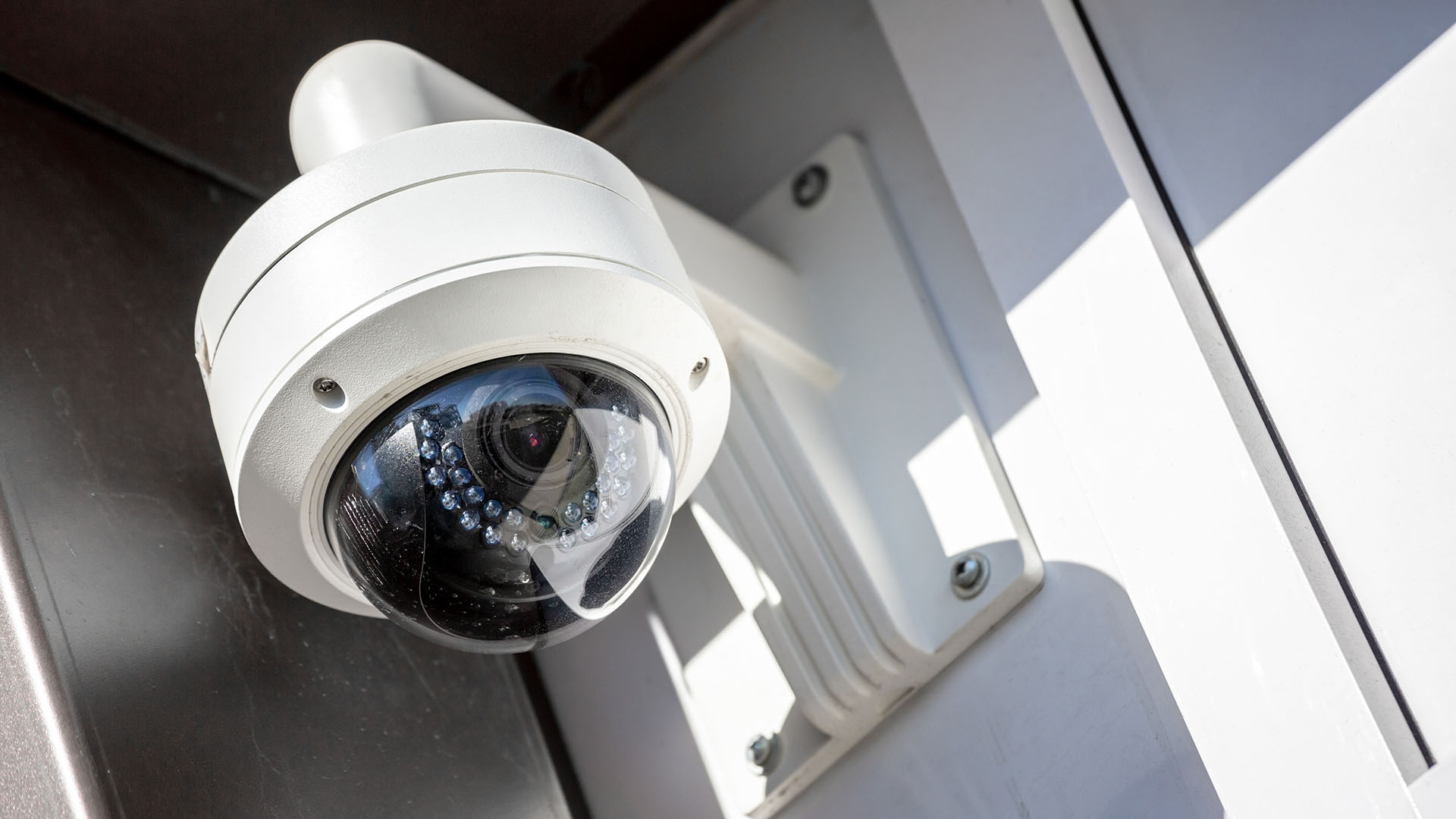
How far will your camera see?
How the calculator works
The calculator uses the pixel density model in the European standard BS EN 62676-4, often called DORI. It sets the number of pixels a camera must put across each metre of the scene for four tasks: detect that a person is there (25 pixels per metre), observe what they are doing (62.5), recognise someone already known to you (125) and identify a person not seen before (250). The figures come from how many pixels land across an average face, so they describe people facing the camera in good light.
For each camera we take the vertical resolution and the vertical field of view stated on the manufacturer’s datasheet. The height of the scene at any distance is twice the distance multiplied by the tangent of half the vertical angle, and the pixel density is the vertical resolution divided by that height. Turning the sum round gives the furthest distance at which each task is still possible. We use the vertical axis deliberately: the horizontal angle quoted for a wide lens includes the stretched edges of the picture, so working from it understates what the camera can do by up to a third on a 2.8 mm lens. Checked against the coverage distances the manufacturers themselves publish for eight lenses, the vertical method lands within a few per cent of them. Where you enter a focal length instead of the angles, the calculator estimates the angles from the active size of the sensor, which is less exact because the inch sizes used for sensors are a historical naming scheme rather than a measurement.
Mounting height is treated as a longer slant range to a face at about 1.6 metres, or a plate at about half a metre, so the distances shown are along the ground. Number plates use 300 pixels per metre as the daylight target, which puts about 24 pixels across the 79 mm characters on a UK plate, with 500 pixels per metre noted where the read has to be dependable. The 2025 revision of the standard adds further levels and a stricter figure for confirming a known person; the calculator keeps the four DORI levels that every current datasheet quotes and will add the new levels as manufacturers adopt them. Every preset was read from a manufacturer datasheet in October 2026 and the source is recorded; the figures remain the manufacturer’s claims, and a site survey is what confirms them.
What the four levels mean in practice
Detect tells you something is there: a figure crossing a yard at night, enough to trigger a response but not to describe anyone. Observe shows clothing, direction and what the person is doing, which is what most overview cameras deliver across a car park or a shop floor. Recognise is enough to say with confidence that it is a particular person you already know, such as a member of staff or a regular visitor. Identify is enough to identify someone you have never seen before, the level evidence usually needs, and it is only achieved close to the camera.
This is why a good design mixes cameras: wide lenses for overview, and narrower lenses or higher resolution at doors, tills and gates where identification matters. A camera that covers a whole yard rarely identifies anyone in it, and a camera that identifies faces at a doorway sees very little else. Infrared range is a lighting figure, not an identification figure; at night the useful distances fall well inside it.
Camera coverage, your questions
How far can a 4 MP camera identify a face?
With a typical 2.8 mm lens, a 4 MP camera reaches 250 pixels per metre at about 5.5 metres, so identification is realistic to about 5.5 metres, recognition to about 11 metres and observation to around 22 metres. A 4 mm lens on the same camera takes identification to about 7 metres and recognition to about 15 metres. The calculator shows the exact figures for each datasheet.
Should I choose a 2.8 mm or a 4 mm lens?
A 2.8 mm lens sees wider and suits doorways, small rooms and short drives. A 4 mm lens sees about a third further at the cost of a narrower view, which suits longer approaches and yards. Many installations use both: wide lenses for overview and narrower ones where faces or plates matter.
What does a camera need to read a number plate?
About 300 pixels per metre in daylight, which puts around 24 pixels across the 79 mm characters on a UK plate, and nearer 500 pixels per metre where the read has to be dependable. The vehicle should be slow or stopped, the plate close to square on, and the camera’s shutter and infrared set for plates rather than people, which is why plate-reading cameras are specified separately.
Why is my camera worse at night than the calculator says?
The pixel figures assume good light. At night the camera relies on infrared or white light, noise rises, the lens opens up and detail falls, so the useful identify and recognise distances shrink. Treat the infrared range on a datasheet as how far the camera can light a scene, not how far it can identify anyone.
Does mounting height matter?
Yes. A camera mounted high and tilted down sees the tops of heads rather than faces, and the slant distance to the person is longer than the distance along the ground. Keep cameras that must identify faces nearer head height with a shallow tilt, and mount overview cameras higher where they are harder to reach.
Is a PTZ camera better than a fixed camera?
A pan-tilt-zoom camera can identify at long range when an operator or a rule points it at the right place, but it only looks one way at a time and records nothing of where it is not pointing. Fixed cameras record everything in their view all the time. Monitored sites often pair fixed overview cameras with a PTZ that follows an alarm.
Does more resolution always help?
Resolution sets how many pixels there are to spread across the view, and the lens sets how wide that view is. Doubling the pixels across a scene doubles the identify distance, but a wider lens gives them away again. Match the lens to the job first, then choose the resolution that delivers the density at the distance you need.
Are the presets exact for my camera?
They are the manufacturer’s own datasheet figures for the models listed, read in October 2026. Lens batches, firmware and the way a field of view is measured all vary a little between models, so treat the result as a close estimate and let the survey confirm the final positions.
Let us check the cameras on site
Based in Coleraine, we survey homes and businesses across Northern Ireland and specify each camera’s lens and position for the job it has to do, free of charge.
Security for businesses and homes across N.I.
This is one of our free security tools. Explore all our free tools: crime data for your area, CCTV compliance checking and more.