
Quick Answer
Every property is different, so we confirm the cost for your property in a clear written quote after a free site survey.
Farms in Northern Ireland have unique CCTV requirements: large sites, multiple buildings, rural broadband, and the need to monitor everything from livestock to equipment to farm entrances. The best approach is wired cameras where possible (for reliability), with Ubiquiti wireless bridges connecting buildings where running cables isn’t practical. For a typical NI farm with a farmhouse, barns, and outbuildings, a professional system is usually 8-12 cameras with remote viewing from your phone. The cost depends on the number of cameras, the distances between buildings, whether wireless bridges are needed, and how much recording storage you want. We always recommend professional installation: the distances involved and the need for reliable 24/7 recording make this a project for specialists.
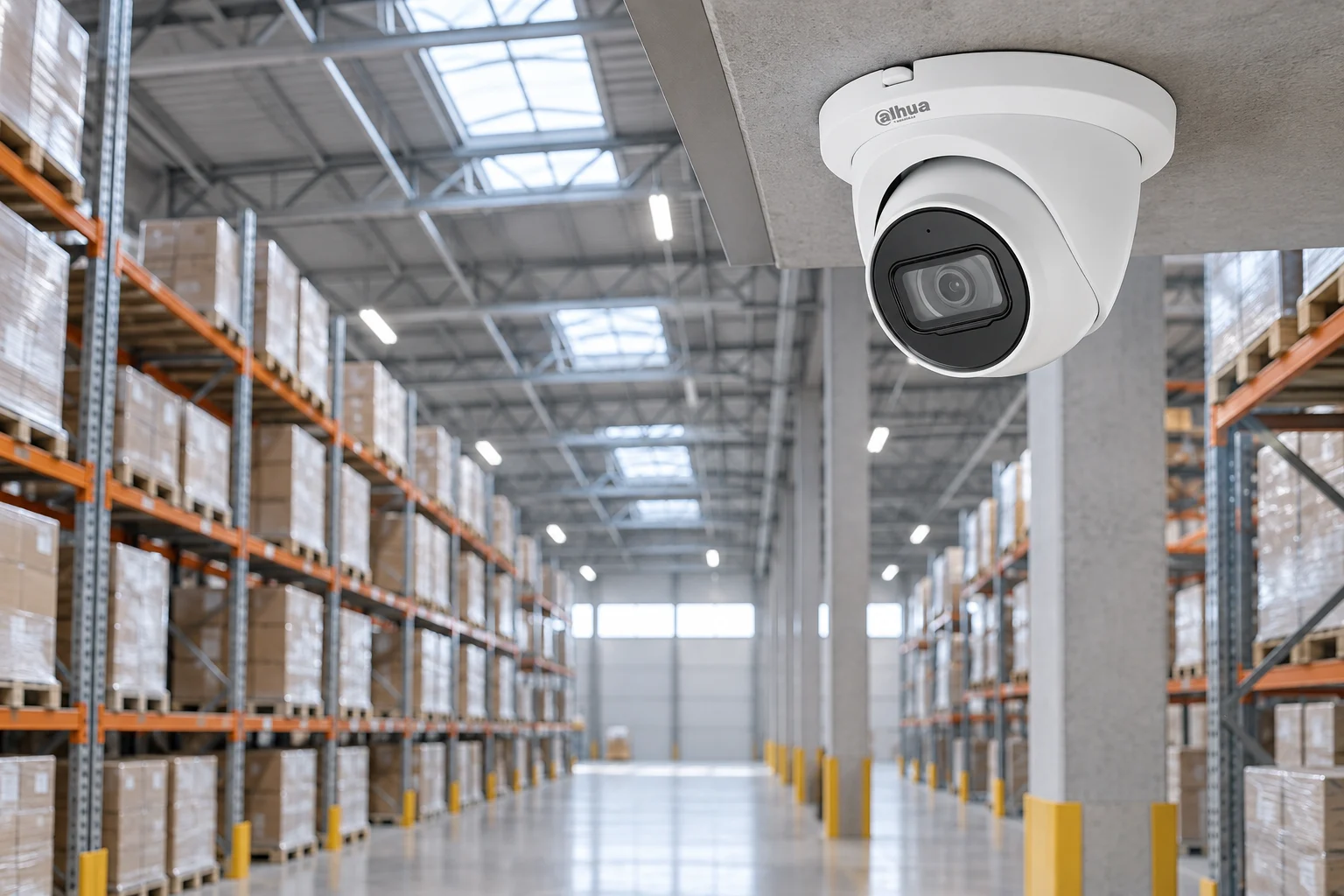
Farms are challenging environments for security. They cover large areas, have multiple buildings spread across the site, and often have poor broadband connectivity. Yet the need for security is significant: farm equipment, livestock, fuel, and tools are all targets for thieves.
This guide explains how to approach CCTV on your Northern Ireland farm.
Farm Security Challenges
Large, Spread-Out Sites
Farms typically span multiple acres with buildings scattered across the property. A single camera at the farmhouse isn’t enough.
Rural Broadband
Many rural farms have limited broadband: either slow speeds or no fibre at all. This affects remote viewing capabilities.
Multiple Buildings
Barns, sheds, grain stores, and workshops are often separate buildings some distance from the farmhouse.
Environmental Factors
Farm environments are harsh: dust, moisture, livestock, and machinery all take their toll on equipment.
Power Supply
Some outbuildings may not have reliable power, or power might be to a single location.
Recommended Camera Types for Farms
1. External Turret Cameras
Best for: Farmhouse and building perimeters
- Weatherproof (IP67 rated)
- Good low-light performance
- Covers large areas when positioned correctly
2. Bullet Cameras
Best for: Building entrances, targeted coverage
- Long-range lens options
- Easy to aim and adjust
- Good for specific problem areas
3. PTZ (Pan-Tilt-Zoom) Cameras
Best for: Large open areas (yards, fields)
- Can cover a wide area with one camera
- Remote control via app
- Auto-tracking of movement
4. Internal Cameras
Best for: Barns, livestock areas, workshops
- Lower cost than external cameras
- Still dust and moisture resistant
- Lets you check on animals and equipment remotely
Wired vs Wireless for Farms
The Ideal: Wired (PoE)
For reliability and image quality, wired cameras are always preferred. However, farms present practical challenges.
When Running Cables Is Possible
If buildings are relatively close and cable routes are available:
- Run buried armoured cable between buildings
- Connect all cameras to a central NVR at the farmhouse
- This gives you the most reliable system
When Cables Aren’t Practical
For farms where buildings are far apart or running cables isn’t feasible:
- Ubiquiti wireless bridges connect buildings wirelessly
- Cameras at each building are wired (PoE) to a local switch
- The switch connects to the Ubiquiti bridge
- This creates a reliable point-to-point link between buildings
- The farmer views everything from one NVR via the app
This is how we handle most farm installations. The cameras themselves are wired for reliability; the bridge replaces the cable run.
Recommended System Design
Typical Farm Layout
Farmhouse (main NVR location) | | (Ubiquiti bridge if needed) | Barn 1: Cameras: 2-4 Barn 2: Cameras: 2-4 Workshop: Cameras: 2 Entrance: Cameras: 2 Total Cameras: 8-12
Core Components
- NVR at farmhouse: Central recording and viewing
- Cameras at each building: Wired (PoE) for reliability
- Ubiquiti bridges: Where cable runs aren’t practical
- Remote viewing: Via smartphone app at farmhouse
Specific Farm Applications
Monitoring Livestock
Cameras in barns and livestock buildings let you:
- Check on animals without visiting every building
- Monitor during lambing/calving season
- Check on sick animals at night
- Receive alerts for unusual activity
Farmyard Security
Cameras covering:
- Main entrance (capture vehicle registrations)
- Farmyard perimeter
- Fuel storage areas
- Equipment storage
Outbuilding Coverage
Cameras in:
- Barns and sheds
- Grain stores
- Workshops
- Stables
Dealing with Rural Broadband
Option 1: Local Recording Only
The NVR records locally. View footage directly at the farmhouse.
- Works even with no internet
- No remote access without broadband
Option 2: Mobile Data
Use a 4G/5G mobile data connection at the farmhouse for remote viewing.
- Dedicated connection for the farm
- Monthly cost for the data plan
- Enough bandwidth for remote viewing (not for streaming multiple cameras simultaneously)
Option 3: Improved Rural Broadband
Several rural broadband schemes are available in Northern Ireland:
- Project Kelvin
- Gigabit NI
- Various rural broadband initiatives
Check what’s available in your area. Better broadband improves remote viewing capability.
Option 4: LTE/4G Cameras
For remote buildings where no connection is possible:
- Cameras with built-in LTE for remote viewing
- Higher ongoing cost (data SIM required)
- Best for isolated buildings
What Affects the Cost of Farm CCTV
The cost of a farm system depends on:
- The number of cameras and where they are mounted
- NVR channels and the storage needed for your retention period
- Wireless bridge links between buildings where cable runs aren’t practical
- Cable runs, including buried armoured cable between buildings
- Installation and commissioning across the site
We confirm the cost for your farm in a clear written quote after a free site survey.
Frequently Asked Questions
Can I monitor my farm on my phone?
Yes, with remote viewing configured. Even with rural broadband, you can usually view cameras from your phone. Some solutions use mobile data if broadband is poor.
What if I have no broadband at the farm?
Local recording still works without internet. Remote viewing requires some form of connectivity (broadband, mobile data, or LTE cameras).
How do I protect equipment in remote barns?
Cameras covering the barn interior and entrance are the first step. Motion-triggered floodlights also help deter thieves.
Can cameras withstand the farm environment?
Yes. We specify cameras rated for outdoor use (IP67 minimum) and consider the dusty, moist conditions in barns.
Do I need planning permission for farm CCTV?
Generally no for normal farm security use. Cameras should be focused on your own property. If you’re near a public road or footpath, consider the positioning to minimise intrusion.
Can I add cameras later?
Yes. We design systems with expansion in mind: choose an NVR with more channels than you need initially.
Summary
For farms in Northern Ireland, the best approach is:
- Wired cameras for reliability
- Ubiquiti bridges for buildings where cables aren’t practical
- Central NVR for recording
- Remote viewing via smartphone app
- Professional installation given the complexity
The cost of a farm system depends on the number of cameras, the distances between buildings and the storage you need. We give a clear written quote after a free site survey.
Related reading
- Service page: CCTV installation in Northern Ireland
- Related guide: Wired vs Wireless CCTV: Which Is Better for Your Northern Ireland Property?
- Related guide: How Much Does CCTV Cost in Northern Ireland?
- All of our guides: Knowledge Base