
The short answer: your Belfast business needs fire precautions suited to the premises and the people who use them. A fire risk assessment establishes what detection and warning arrangements are needed. Floor area alone cannot decide this.
Whether you are opening premises, upgrading an older alarm or arranging maintenance, Advanced Overwatch can help turn the agreed fire safety requirements into a practical system and service plan.
Fire alarm requirements in Northern Ireland
Northern Ireland has its own fire safety legislation: the Fire and Rescue Services (Northern Ireland) Order 2006 and the Fire Safety Regulations (Northern Ireland) 2010. NIFRS enforces this legislation in the majority of relevant premises. See its business fire safety guidance.
Three things need to work together:
- The fire risk assessment: identifies the precautions needed for the people and activities in your premises.
- The building requirements: building work may also need Building Control approval, with fire safety guidance in Technical Booklet E.
- The system specification: BS 5839-1:2025 is the current code of practice for fire alarm systems in non-domestic premises.
The assessment and any fire strategy inform the specification. The installer then designs the system around those agreed requirements.
What your premises need
The building and its occupants
- The layout, escape routes and how different parts of the building are used.
- The people who use the premises, including anyone who needs help to evacuate.
- Existing detection, warning arrangements and known faults.
The way the premises are used
A shop, workshop, office and hotel can have very different fire safety needs. The assessment considers the actual use, rather than assigning a system from the business name.
- Sleeping accommodation or people unfamiliar with the building.
- Activities, materials or equipment that introduce particular risks.
- Shared premises, changes of use and alterations to the layout.
Competent advice and agreed requirements
NIFRS says a suitably competent person should complete the fire risk assessment. It should be reviewed when circumstances change. Its fire risk assessment guidance explains the responsibilities.
- Your fire risk assessor or fire safety specialist establishes the safety objectives.
- Building Control deals with relevant building work and approvals.
- Your insurer may specify additional property-protection requirements.
We can discuss a new installation or upgrade against the assessment, plans and any requirements already agreed for your premises.
Which fire alarm category applies?
BS 5839-1 uses eight categories, grouped below. They describe the purpose and extent of protection.
| Category | Purpose | What it describes |
|---|---|---|
| M | Manual warning | A manual alarm system without automatic fire detectors. |
| L1 to L5 | Life protection | Automatic detection with different coverage and life-safety objectives. |
| P1 and P2 | Property protection | Automatic detection throughout the building or in defined parts. |
The appropriate category should be agreed with the people responsible for the fire safety specification. The Fire Industry Association category guide explains why the choice requires an assessment of the building.
How the system is put together
The equipment arrangement is a separate design choice from the category. These terms describe different parts of a system:
Manual warning and automatic detection
- Manual call points let someone raise the alarm.
- Automatic detectors respond to the conditions they are designed to detect, such as smoke or heat.
Conventional systems
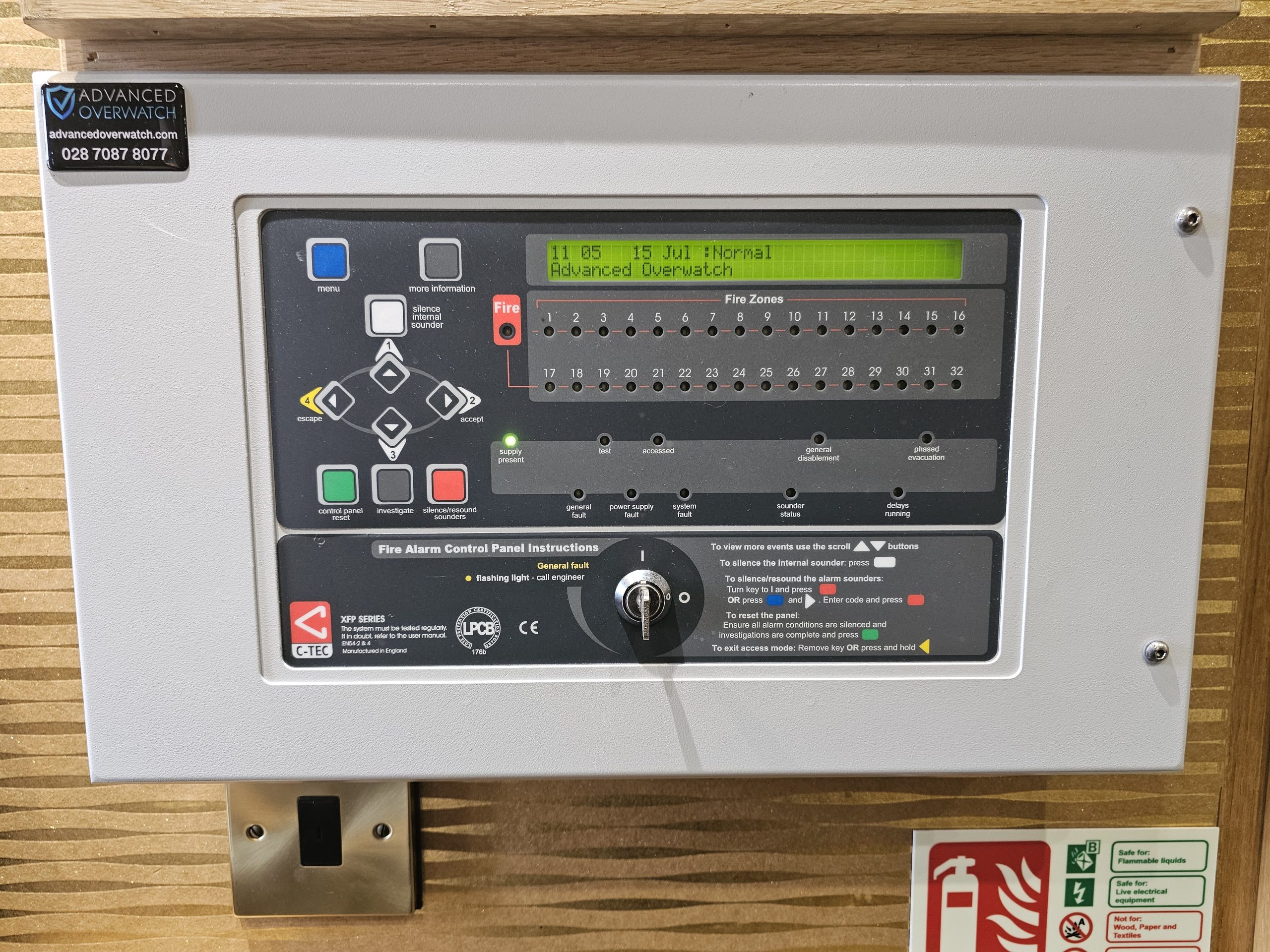
- A conventional panel indicates the zone where an alarm has been raised.
- The design must still provide the agreed detection coverage and warning arrangements.
Addressable systems
- An addressable system can identify individual devices at the panel.
- This can help staff and engineers locate an activation or fault. Compatibility and the building layout remain important.
We explain the proposed equipment and its purpose in the quotation, so you can see what the system will do for your premises.
Installation and handover
Good handover leaves you with a system you can operate, records you can refer to and a clear route for reporting faults.
Agree the handover information as part of the work:
- The system specification and relevant design, installation and commissioning certificates.
- Zone information, operating instructions and records of any agreed variations.
- An explanation of routine checks, fault reporting and maintenance arrangements.
For an existing system, the initial review should establish:
- What is installed and what records are available.
- Whether known faults or changes to the premises need attention.
- What can be maintained or upgraded, with any limitations explained.
Our Engineers, subcontractors and Fire Risk Assessors are highly experienced, thoroughly understanding commercial and residential fire detection and alarm requirements.
Looking after your system
Routine user checks and professional servicing have different roles. Both belong in the maintenance arrangements, along with prompt attention to faults.
- Routine checks: follow the agreed user testing and recording arrangements.
- Professional servicing: the FIA describes inspection and servicing at approximately six-month intervals under BS 5839-1:2025, with a one-month tolerance either side. The programme should account for the system and premises.
- Faults and changes: record problems and arrange remedial work; review coverage when the building changes.
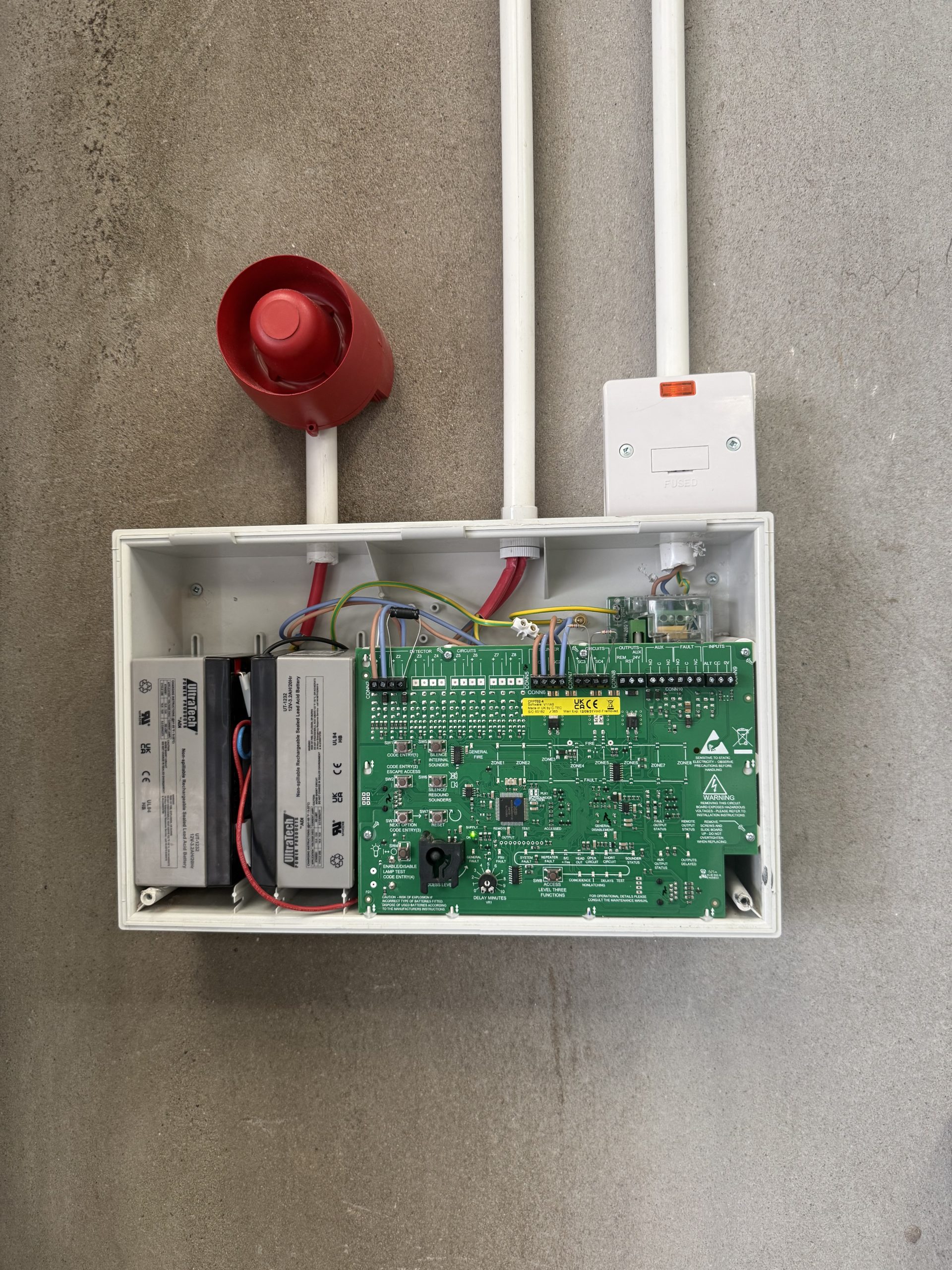
The FIA maintenance guidance explains the servicing interval. Advanced Overwatch can provide planned preventative maintenance and explain what is included in the agreed programme.
Planning the work
A useful quotation makes the scope clear. The main factors include:
- The specified category and extent of detection.
- The equipment, cabling routes and access needed.
- Work on an existing system and any agreed interfaces.
- Commissioning, handover and ongoing maintenance.
Our site survey helps establish the work required before we prepare a written quotation.
The proposal should make clear:
- What is included in the installation or upgrade.
- Any assumptions, exclusions and work by others.
- The commissioning and handover arrangements.
Installation timing
Timing depends on the premises and the agreed scope. We can plan around:
- Access to occupied areas and suitable working hours.
- Equipment availability and other contractors on site.
- Testing, staff handover and any required approvals.
The programme is agreed for your project, including any arrangements needed while an existing system is being altered.
When circumstances change
A review is useful when:
- You take on premises or change their use.
- You extend, divide or substantially alter occupied areas.
- Your assessment identifies a gap in protection.
- Faults recur or maintenance records are incomplete.
We can assess the existing installation and explain the practical options, from maintenance and remedial work to a wider upgrade.
Records and insurance
A single certificate does not replace ongoing fire safety management. Keep the documents together so the next review starts with reliable information.
- The current fire risk assessment and any relevant fire strategy.
- System drawings, certificates, user checks and service records.
- Outstanding actions, completed repairs and any insurer requirements.
Insurance conditions depend on your policy. Confirm the requirements with your insurer or broker when specifying or changing the system.
Fire alarm support in Belfast
- New premises: a system designed around the agreed fire safety requirements.
- Existing alarms: a review of condition, faults and upgrade options.
- Ongoing care: planned preventative maintenance with clear service records.
Advanced Overwatch installs, upgrades and maintains fire alarm systems across Belfast and Northern Ireland. We explain the proposed work and support arrangements before you commit.
Call 028 7087 8077 or see our fire alarm installation service to discuss your premises.
Serving businesses across Northern Ireland.
Common questions
Does an older fire alarm need to be replaced?
Age alone does not decide this. The condition of the equipment, available support, fault history and suitability for the premises all matter. We can review the installation before recommending maintenance, an upgrade or replacement.
Does a fire risk assessment replace an alarm?
No. The assessment identifies the precautions needed. Any actions it identifies must then be addressed, which may include installing, improving or maintaining detection and warning arrangements.
Can you maintain an existing fire alarm?
We can review the system, its records and condition, then confirm whether we can take on maintenance and what remedial work is needed. The agreed programme explains the servicing and support included.
Sources and current guidance
NIFRS business fire safety and fire risk assessments: the Northern Ireland legal framework and responsibilities.
Technical Booklet E: Department of Finance fire safety guidance for building regulations, including the current amendment notices.
BS 5839-1:2025: the current non-domestic fire alarm code of practice. The FIA provides further guidance on system categories and maintenance.
Apollo explains conventional and addressable equipment. Guidance checked on 23 October 2026. The specification for an individual building still needs a competent assessment.