
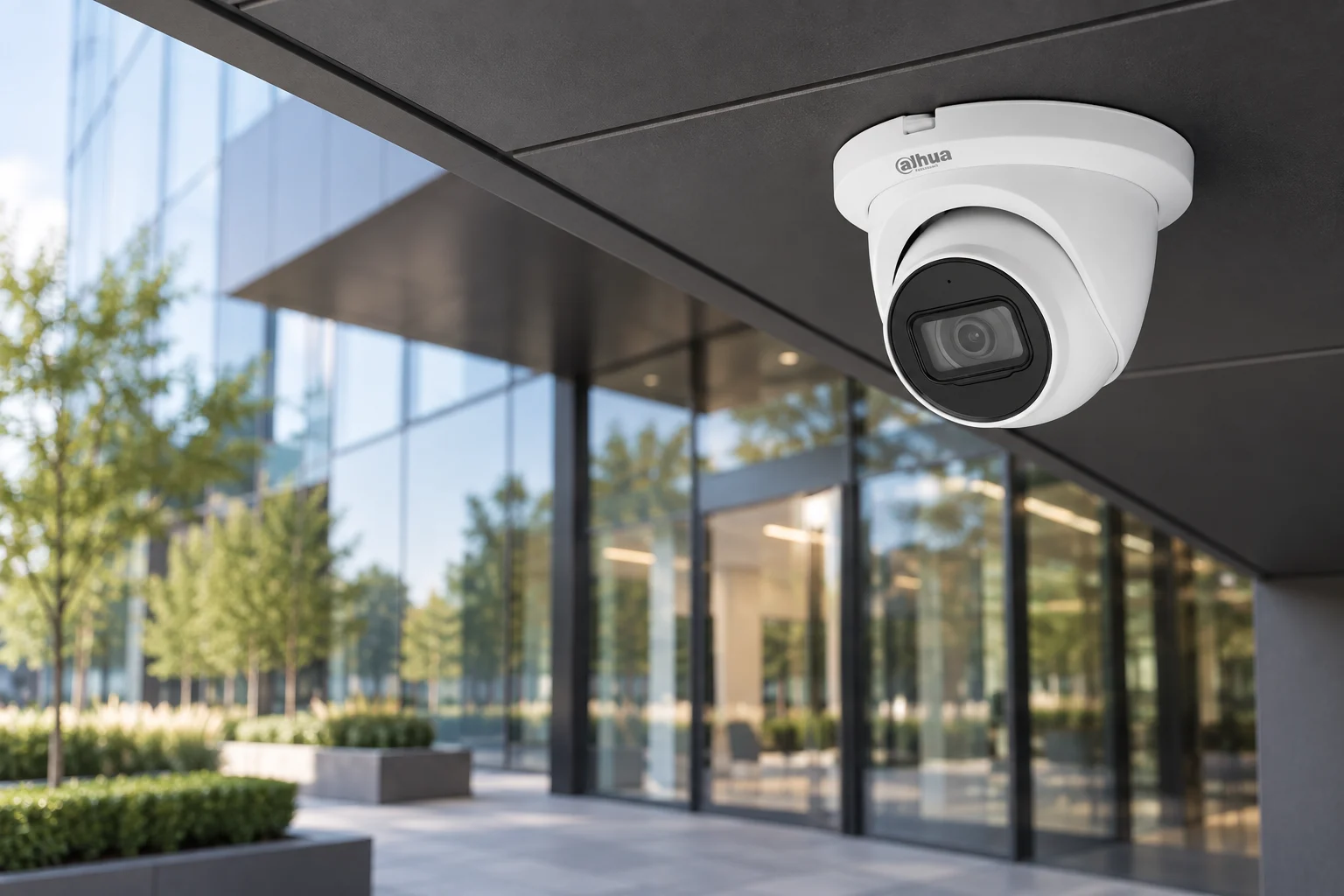
AI-Driven CCTV Analytics
Advanced Overwatch configures and maintains AI CCTV analytics for businesses across Northern Ireland.
Modern cameras can do far more than record. AI-driven analytics detect people and vehicles, protect perimeters, count footfall and flag unusual behaviour the moment it happens, turning your CCTV from a passive recorder into an active detection system.
Thousands of premises secured since 2017
Useful analytics begin
with a useful question.
Connect the camera view, the detection rule and the person who needs the result.
A useful camera view
Position, lens, light and recording quality establish what the system can see.
A suitable detection rule
Supported analytics classify or measure defined activity within the agreed scene.
A clear next action
An event needs an agreed destination, review and response arrangement.
view
rule
response
Equipment, configuration
and people work together.
Start with the question at your site
A useful brief names the activity, the location and what somebody will do with the result.
| Your question | A possible analytics approach | What the survey needs to check |
|---|---|---|
| Has someone crossed this boundary? | Line crossing or intrusion detection | View, direction, detection area and the time the rule applies. |
| Is a vehicle using this approach? | Vehicle classification or a defined zone | Distance, headlights, mounting position and expected traffic. |
| How is this entrance being used? | People counting or occupancy-related analysis | Camera position, the counting line and the limits of the chosen equipment. |
| Does this area need a review? | Presence, loitering or configured event rules | The intended activity, trigger conditions and who will examine the event. |
Functions depend on the camera, recorder, licences and scene. Analytics can miss events or raise unwanted alerts; testing and review remain part of the service.
Configuration needs
follow-through
The installation is only one part of the work. Scenes change, and rules need to be checked against the premises.
- 01
Survey the scene
Review relevant camera positions, mounting heights, lenses, lighting and the activity the customer needs to understand.
- 02
Write the rule
Agree the detection type, area, conditions and intended next action before configuration.
- 03
Configure and test
Set supported rules and review their behaviour against relevant site conditions, including changing light and traffic.
- 04
Connect the response
Route suitable events to the agreed application, team or monitoring arrangement, with responsibilities clear.
- 05
Revisit after change
Review the view and rule when layouts, lighting, vegetation or site use change.
An alert needs
a next step.
Decide who receives an event, who reviews it and what action is authorised.
Your team or application
Supported events can be routed to agreed users or software. Connectivity, permissions and platform support need to be established.
Professional CCTV monitoring
Discuss event review through our own 24-hour CCTV Monitoring Control Room, with an agreed escalation plan for your premises.
Operational information
Counting, queue and movement analysis can inform a business question. Agree how the figures will be interpreted and check their practical limits.
Standards and questions before you proceed
Video analytics that picks out people processes personal data, so UK GDPR and the Data Protection Act 2018 apply. The Information Commissioner’s Office publishes guidance on CCTV and video surveillance covering purpose, necessity, transparency and retention, and it is the right starting point before analytics goes live. Where the lawful basis is legitimate interests, the ICO expects a documented balancing test, set out in its legitimate interests guidance. Facial recognition carries a much higher bar again, and we will say plainly where a proposed use is not proportionate. The system standards for video surveillance are the BS EN 62676 series published by BSI, which ties image quality to the purpose each camera serves.
Questions for any supplier
Worth asking any supplier: which analytics run on the camera and which on the recorder; what happens to accuracy at night and in heavy rain; how false alerts are measured and tuned after handover; whether the licence is perpetual or annual; and who actually reviews an alert once it is raised.
AI CCTV analytics questions
What can AI analytics actually detect?
People, vehicles, direction of travel, line crossing, loitering and unusual activity, with far fewer false alarms than motion detection alone.
Can analytics be added to existing cameras?
Often yes. Following a survey, many systems can gain analytics through recorder or camera upgrades rather than full replacement.
How do analytics reduce false alarms?
The system classifies what it sees, so a fox, headlight or moving branch no longer triggers a response, while a person crossing your perimeter does.
What business insights can cameras provide?
Footfall counts, queue lengths, dwell times and heat maps, useful for staffing, layout and marketing decisions as well as security.
Is video analytics compliant with data protection law?
It must be deployed thoughtfully, and we design deployments with UK GDPR in mind, supported by our CCTV compliance and policy services.
Can my employer listen to my conversations on CCTV?
Audio recording is treated as far more intrusive than video and is rarely justified in a workplace. Most systems we design have audio disabled, and where a client asks for it we document the purpose and the lawful basis first or advise against it. If audio is switched off at the camera, no analytics can listen to anything.
Does CCTV analytics need a particular camera brand?
No. What decides whether analytics works is resolution at the point of interest, lens choice, mounting height and lighting. Several manufacturers support the same detection types, so the survey works out what your positions can support rather than starting from a brand name.
How much do CCTV analytics cost?
It depends on how many camera positions need rules, whether licences are charged per camera or per recorder, and whether your existing equipment can carry the analytics at all. We price the work after walking the site and give you a fixed quote after a free survey.
What should your cameras
help you understand?
Book a free site survey to review your camera positions, supported analytics and the work needed.