
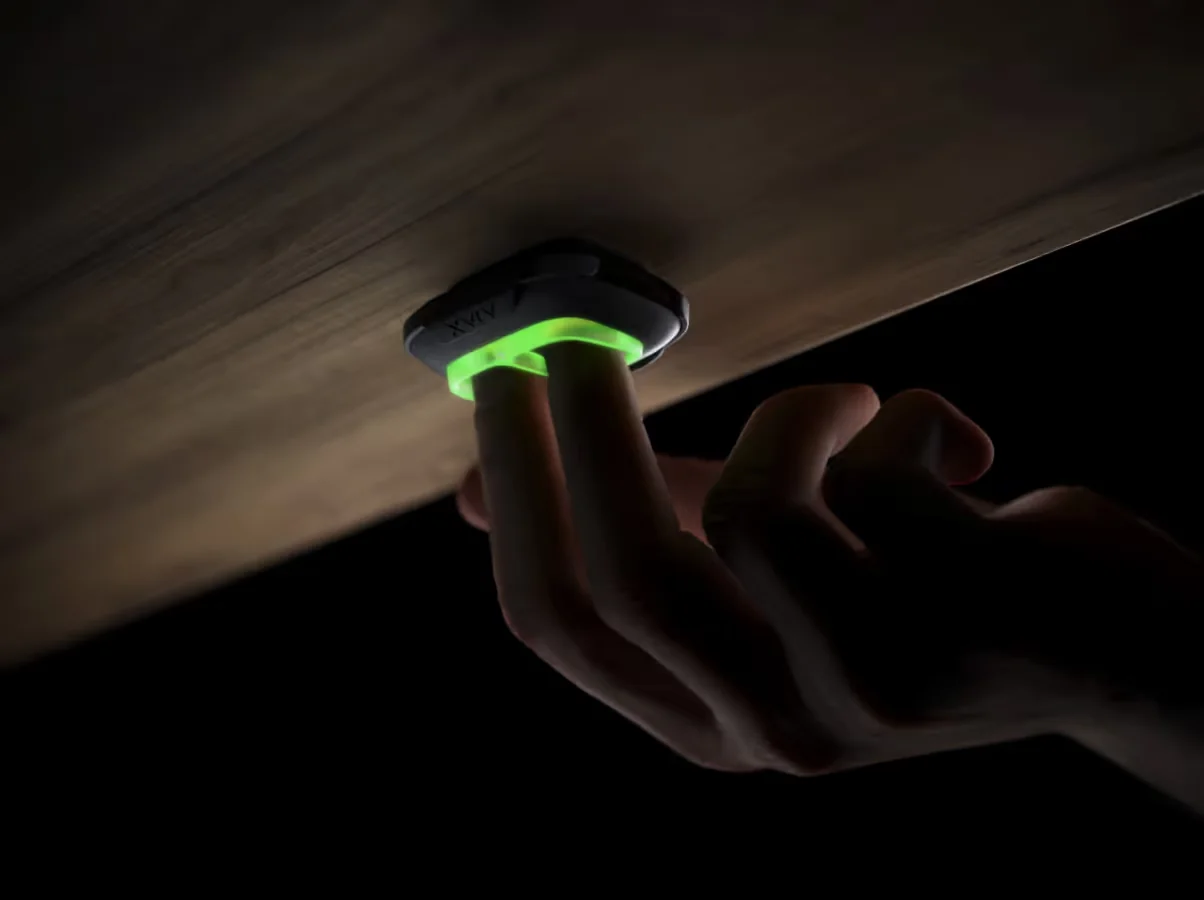
Panic Alarms
Advanced Overwatch designs and installs panic and hold-up alarms for businesses across Northern Ireland.
When a member of staff is threatened, help must be one discreet press away. We design and install panic and hold-up alarms with monitored response, positioned where your people actually face risk.
Thousands of premises secured since 2017
Put the alarm where people need it.
A panic or hold-up alarm starts with the places and situations where staff face risk. We review the premises with the people who use them, then agree suitable triggers, signalling and response arrangements.

Counters & tills
A fixed trigger needs to be reachable in the way staff actually work, with the risk of accidental operation considered.
Receptions & offices
Consider the first point of contact, isolated rooms and areas without a clear view of colleagues.

Public-facing roles
Shops, pharmacies, forecourts, schools and surgeries need arrangements based on their own risks.
Opening & closing
Review lone shifts, movement through the premises and the limits of a building-based device.
An alarm forms part of the risk controls alongside layout, staffing and training. It does not prevent every incident or make a confrontation safe. See how it fits into retail security ↗
Fixed position. Or carried with you.
The right arrangement depends on how staff move, the existing alarm and the signalling available. The activation method, silent or audible behaviour and response procedure are agreed for the selected system.
A familiar, reachable position.
Wired or compatible wireless devices can be considered for counters and desks. Check reach, discreet operation, accidental activation and the actual signalling path during commissioning.
Match the device to the working area.
A building-linked button depends on the range and coverage of its own system. Work away from the premises may need a separate lone-worker service, with connectivity and escalation assessed for the role.
Know where the signal goes.
The proposal identifies the receiving arrangement, contacts, verification where applicable, and escalation. Hold-up signalling and any police-response eligibility must be confirmed for the specific service.
Advanced Overwatch operates its own 24-hour CCTV Monitoring Control Room. Intruder alarm monitoring is provided through our monitoring partner’s NSI Gold certified Alarm Receiving Centre (ARC). The receiving route for any separate personal-safety device is confirmed for that service.
Practise the agreed procedure.
Commission the complete signalling path, show staff how to use the selected device and agree the test arrangements with the receiving service. Record what to do after an accidental activation.
Keep contacts, training and service records up to date. Never carry out an unannounced live test or assume a call automatically cancels an alarm or stops a response.
Check the system. Check the arrangements.
Standards and practical guidance
Police response depends on the applicable system, registration and policy requirements. A button, a confirmation feature or a reference number alone is not a guarantee of attendance.
Advanced Overwatch is SSAIB certificated (NIRE127) specifically for Intruder Alarm Systems, Visual Surveillance Systems (VSS) and Access Control Systems.
Further guidance: HSE violence at work · HSE lone working. These are practical resources, not a substitute for assessing the specific Northern Ireland workplace.
Panic and hold-up alarms, answered.
How does a panic alarm differ from an intruder alarm?
An intruder alarm detects unauthorised entry or movement in the areas it protects; it can also protect parts of an occupied building. A panic or hold-up alarm lets a person deliberately signal a threat or need for assistance. The sounder behaviour, receiving service and response are specified for the system. Neither function guarantees that a confrontation will not escalate.
Are activations silent?
Silent operation can be appropriate where sounding an alarm could increase risk. Audible arrangements may suit other circumstances. The behaviour must be chosen through the risk assessment and explained to users. Do not assume a device is silent simply because it is described as a panic button.
Who responds when it is pressed?
The receiving service follows the response plan agreed for that system. The proposal should identify who receives the signal, how it is assessed and which contacts or responders may be called. Hold-up monitoring and any police-response eligibility must be confirmed specifically. Response times and police attendance are not guaranteed.
What premises typically need panic alarms?
The need follows the risk assessment, rather than the business label alone. Typical areas to review include retail counters, pharmacies, forecourts, receptions, cash-handling offices and lone opening or closing shifts. The alarm should form part of the wider controls, including layout, staffing, training and procedures.
Can panic buttons integrate with our existing alarm?
Possibly. We assess the existing panel, supported devices, signalling, condition and monitoring arrangements. A physical connection alone does not establish a suitable hold-up service or police-response eligibility. The selected arrangement needs to be commissioned and documented as a whole.
What is the difference between a panic alarm and a hold up alarm?
Panic alarm is a broad everyday term for a deliberately raised personal-safety alert. Hold-up alarm has a more specific use in intrusion and hold-up systems and the relevant response arrangements. A general personal-safety device should not automatically be presented as an eligible monitored hold-up system.
What happens if a panic button is pressed by mistake?
Follow the accidental-activation procedure agreed with the receiving service and explained during handover. Do not assume a phone call or reset automatically cancels the event or stops a response. Record and review accidental activations so device position, user training or the system configuration can be addressed where appropriate.
Can staff carry a panic alarm away from the building?
Only if the device and service are designed for that use. A wireless button linked to a building alarm remains dependent on the coverage of that system. Staff working between sites or in the field may need a separate lone-worker device or app with suitable connectivity and agreed escalation. Coverage and location features have limitations that must be assessed for the role.
Plan protection around your team.
Bring your existing alarm details, staff concerns and response requirements to the survey.