
In most cases, yes, but with real limits. Home CCTV is lawful in Northern Ireland, and a neighbour does not need your consent to record. However, once their camera captures your property, a shared space or the street, data protection law applies to them and you gain enforceable rights over that footage.
That single sentence resolves most of these disputes, but it rarely settles the worry behind the question. If you have noticed a camera or a smart doorbell across the fence that seems to look straight at your front door, your kitchen window or your children playing in the garden, what you actually want to know is where the line sits and what you can do about it.
This article sets out the framework as it applies in Northern Ireland: when a home camera falls outside the rules entirely, what its owner must do once it does not, what the courts have said, and the practical steps that tend to work. It also covers the planning rules, which are set by a Northern Ireland instrument rather than the guidance you will find on most UK websites.
One thing to be clear about first. This is general information, not legal advice. If you are in a live dispute with a neighbour, or the situation involves anything beyond camera positioning, speak to a solicitor.
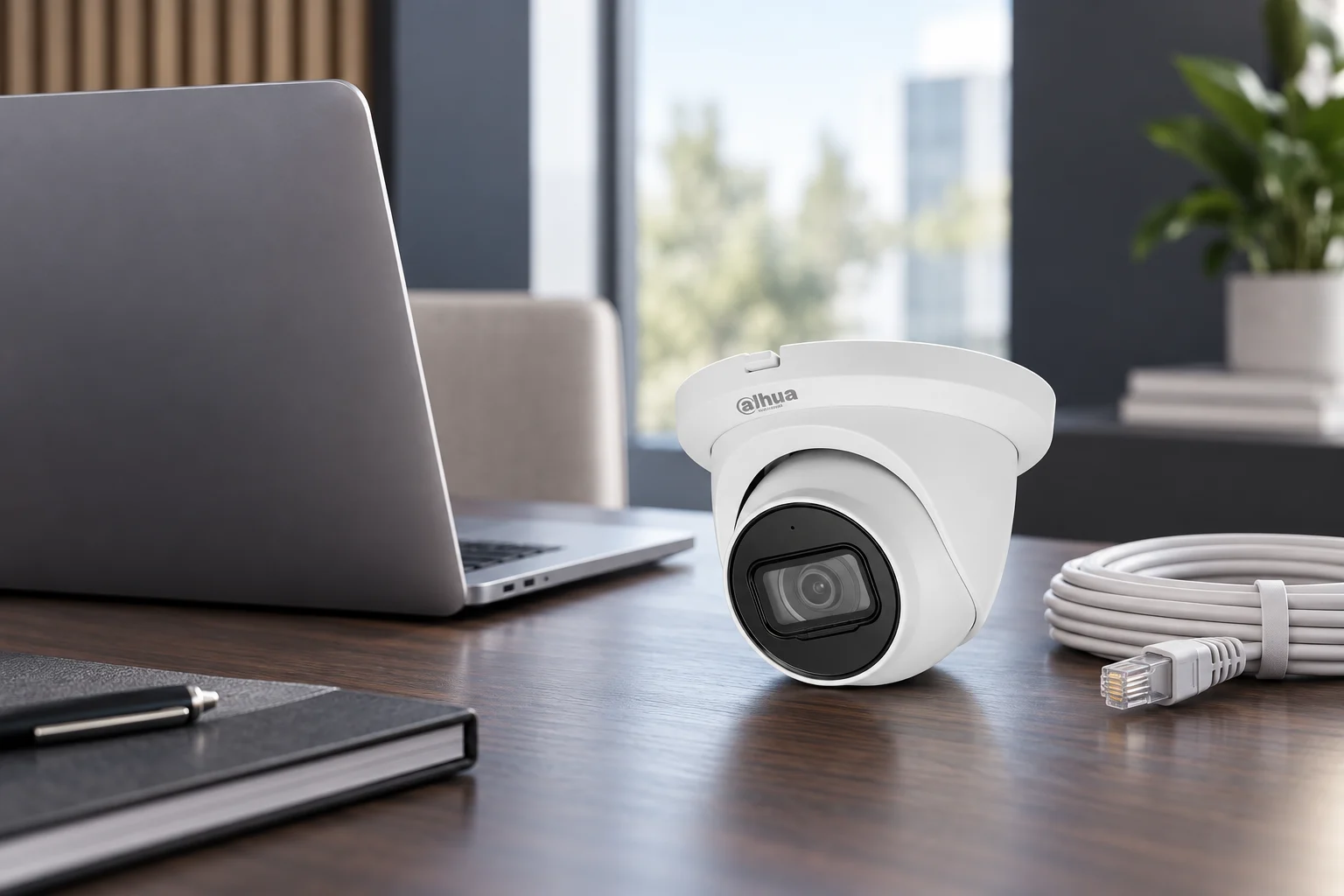
Home CCTV Is Lawful, and Your Consent Is Not Required
Start from the right baseline, because a lot of anxiety comes from expecting the law to say something it does not.
People install cameras for ordinary reasons. Break-ins in the area, a car damaged overnight, a vulnerable relative living alone. The law recognises that. A camera owner does not need your permission to record you. As the ICO puts it, consent will rarely be required for home CCTV, because the owner will usually have a legitimate reason to collect the footage, typically protecting themselves, their family and their property.
What the owner does have to do is show that their interest in recording outweighs the intrusion into everyone else’s privacy. That balance is where the argument actually happens. It is not a question of whether they are allowed a camera. It is a question of how much of your life that camera reasonably needs to see.
When Data Protection Law Starts to Apply to a Home Camera
There is an exemption in UK data protection law, at Article 2(2)(c) of the UK GDPR, for processing carried out by an individual in the course of a purely personal or household activity. A camera that only ever sees inside its owner’s own boundary sits comfortably inside that exemption, and data protection law simply does not bite.
The exemption becomes unlikely to apply once the camera looks outward. The ICO’s own wording is direct: “Where possible owners should position their cameras to only capture their own property. However, if this isn’t possible and the CCTV captures someone else’s property, a public area or communal space, then data protection law applies.”
It is worth being precise about this, because it is often overstated. A stray corner of pavement does not automatically make someone a lawbreaker. The ICO gives a worked example of a camera installed at the front of a house to deter break-ins which, despite careful placement, records a small part of a public street and occasionally the people walking past. Its view is that the owner’s interests likely outweigh the intrusion in that situation.
What changes the picture is scope and deliberateness. A camera framed so that a neighbour’s garden, a shared driveway or a stretch of street sits squarely in shot is a different proposition from one that clips the kerb. Once the coverage is that wide, the owner is responsible for complying with data protection law in relation to everyone it records.
What Your Neighbour Must Do Once Their Camera Crosses the Boundary
If data protection law applies, the ICO sets out what the camera owner must do. They must:
- Have a clear reason for using the CCTV
- Make sure the CCTV does not capture more than they need to
- Let people know they are using CCTV, for example by displaying a sign
- In most cases, provide some of the recordings if asked by a person the CCTV has captured
- Delete the footage regularly or automatically, or both
- Stop recording a person who objects, where there is no legitimate reason to continue
Two of those are worth a closer look, because they are the two that give you something to work with.
The signage point surprises people. A domestic camera covering ground beyond the boundary is expected to be signposted, in the same way a shop’s system is. Very few home installations in Northern Ireland actually are.
The footage point matters more. If a camera records you, you can ask its owner for a copy of the footage you appear in. That is a subject access request, and they normally have one calendar month to respond. In practice this is often the single most useful step available, and not for confrontational reasons. Seeing the footage usually reveals that the camera covers far less of your property than it looks like from the outside, and the dispute evaporates.
The Fee Question Most Articles Get Wrong
A common claim online is that a neighbour whose camera overlooks your property must register with the ICO and pay an annual data protection fee. For an ordinary household, that is not right.
The ICO’s guidance for the activities of households sector states that individuals are exempt from paying a fee where the only information they process is for personal, family or household affairs with no connection to any commercial or professional activity. It then gives, as an example of exempt processing, using CCTV to monitor property, even where images beyond the boundaries of the property are captured.
So a homeowner does not normally owe a fee. What they cannot do is treat that as a clean bill of health. Being outside the fee regime is not the same as being outside the rules. The obligations in the previous section still apply in full, and your rights against them are unaffected.
The position is different where a camera serves a business. If CCTV is used at business premises for crime prevention, and crime prevention is not the purpose of that business, a fee is payable. A camera on a home that also runs a business, or one covering a commercial yard, needs looking at on its own facts.
Audio Is the Part Most People Get Wrong
If you take one practical point from this article, make it this one.
Video and audio are not treated the same. A camera pointed at a front door can usually be justified as protecting the property. A microphone that picks up conversations in a neighbouring garden, on the footpath or at the gate is much harder to defend, because it collects far more than security requires. Most people never consider it, because audio is switched on by default on almost every smart doorbell sold.
It is also the point on which a camera owner is most likely to find themselves in genuine difficulty, which the case below illustrates.
What the Courts Have Said: Fairhurst v Woodard
In October 2021 the County Court at Oxford decided Fairhurst v Woodard, a dispute between neighbours over a Ring doorbell, a camera covering a shared driveway and other cameras around a property. It is the case everyone cites, and it is routinely reported inaccurately, so it is worth being precise about what was actually decided.
Three claims were brought. The outcome was mixed:
| Claim | Outcome | Why |
|---|---|---|
| Harassment | Succeeded | A course of conduct including misleading the neighbour about what the devices captured and threatening to share images |
| Breach of data protection law | Succeeded | Personal data was not processed lawfully or for legitimate specified purposes |
| Private nuisance | Failed | The court held it was bound by authority that overlooking alone could not found a claim in nuisance |
The detail on the data protection finding is the useful part. The doorbell’s video was found lawful, on the basis that incidental capture of the neighbour walking past was a fair balance. The audio was not. Its range extended far beyond the defendant’s property, capturing people who had no idea the device was there, and the judge considered audio capability unnecessary for home security in the first place. The driveway camera also failed, because it collected data outside the property without justification.
Three caveats belong with this case, and they matter.
First, it was a County Court decision. It binds the parties to that case and sets no binding precedent for anyone else. It is an illustration of judicial thinking, not a rule.
Second, the harassment claim was decided under the Protection from Harassment Act 1997, which applies in England and Wales. In Northern Ireland, the equivalent is the Protection from Harassment (Northern Ireland) Order 1997.
Third, the nuisance reasoning has since been overtaken. Fairhurst relied on the Court of Appeal decision in Fearn v Board of Trustees of the Tate Gallery, which held that mere overlooking could not amount to nuisance. In 2023 the Supreme Court reversed that decision by a majority, holding that visual intrusion can amount to an actionable private nuisance. The Court was careful to say this does not create a general tort of overlooking, and the facts there were extreme, involving a public viewing platform used by hundreds of thousands of visitors. It would be a stretch to read it as a route to challenge an ordinary domestic camera. But the flat statement that overlooking can never be a nuisance is no longer good law.
You will also see reports of a six-figure damages figure attached to Fairhurst. No such figure was set at that trial. The judgment invited further submissions on remedy, and the number that circulated in the press was speculation.
When Camera Use Becomes Harassment in Northern Ireland
The Protection from Harassment (Northern Ireland) Order 1997 creates both a criminal offence and a civil remedy for a course of conduct that causes alarm or distress. A course of conduct means behaviour on at least two occasions, so a single incident involving a camera will not normally meet the threshold on its own.
Set expectations realistically here. The ICO’s own view is that it is unlikely the police would treat someone using CCTV to record you as harassment without other misconduct by that person. Harassment is generally the right framing where the camera is one element of a wider pattern of behaviour, which is precisely how it arose in Fairhurst. If a camera is genuinely part of a broader course of conduct directed at you, that is a matter for the PSNI and for legal advice, not a data protection complaint.
Does a Home CCTV Camera Need Planning Permission in Northern Ireland?
Most guidance you will find online answers this using the England and Wales planning rules. Northern Ireland has its own, and the numbers are set out in the Planning (General Permitted Development) Order (Northern Ireland) 2015.
Schedule Part 22, Class A of that Order grants permitted development rights for the installation, alteration or replacement on a building of a closed circuit television camera to be used for security purposes. In other words, planning permission is normally not required, provided the installation stays within these limits:
| Limit | Requirement under Part 22 Class A |
|---|---|
| Camera size | Must not exceed 75cm by 25cm by 25cm, including its housing |
| Height | Must not be less than 250cm above ground level |
| Projection | Must not extend more than 1 metre from the surface of the building |
| Spacing | Must not be less than 10 metres from any part of another camera |
| Cameras per side | No more than four on the same side of the building |
| Cameras per building | No more than 16 in total |
“Camera” is defined broadly in the Order and includes the housing, pan and tilt mechanism, infra red illuminator, receiver, mountings and brackets, so a compact camera on a large bracket can still exceed the dimensions.
Two conditions attach. The camera must, so far as practicable, be sited so as to minimise its effect on the external appearance of the building, and it must be removed as soon as reasonably practicable once it is no longer needed for security purposes.
Critically, these permitted development rights do not apply at all where the building is listed, is in a conservation area, or is on a site of archaeological interest. In those cases you should speak to your council’s planning office before anything is fitted. Given how much of Northern Ireland’s housing stock in places like the Causeway Coast, central Belfast and our conservation villages falls into those categories, it is worth checking rather than assuming.
Note that the planning rules and the data protection rules are entirely separate. A camera can be perfectly lawful from a planning point of view and still be recording more than it should.
What to Do If a Neighbour's Camera Is Pointed at Your Home
The ICO’s advice, and ours, is to start with the least adversarial step and escalate only if you need to.
- Talk to them first. Most people fitting a camera are thinking about their own front door, not about you. They may not realise how it looks from your side, and repositioning is usually a five minute job.
- Ask what it actually records. Ask to see the view. This resolves more of these situations than anything else, because cameras almost always cover less than they appear to.
- Ask about privacy zones. Most modern systems can mask out areas of the image so a neighbouring property or window is blanked permanently. Many owners do not know the feature exists.
- Ask about the audio. Request that it be switched off or its range reduced. This is a reasonable ask and easy to action.
- Put it in writing. The ICO publishes a template letter for raising concerns with a camera owner, which sets out your concerns and asks specific questions about what is being recorded.
- Exercise your rights. You can request a copy of footage you appear in, ask for it to be deleted, and formally object to being recorded. The owner should normally respond within one calendar month.
- Escalate appropriately. Data protection concerns go to the ICO. Conduct that may be criminal goes to the PSNI. A civil claim or an injunction is a matter for a solicitor. If your neighbour rents, their landlord or housing officer may be able to help.
Mediation is worth considering before the formal routes. It is usually faster, and unlike a complaint, it leaves you on speaking terms with the person living next door.
If You Are the One Installing: Getting It Right First Time
Everything above is far easier to avoid than to unwind. A properly designed system rarely produces a neighbour dispute, because the coverage is deliberate rather than accidental.
The practical principles are straightforward. Choose the right lens and mounting position so the camera sees what it needs to and no more, rather than fitting a wide angle camera and accepting whatever lands in frame. Apply privacy masking to any part of the image covering a neighbouring property or window. Make a considered decision about audio instead of leaving it on by default. Signpost the system if it covers ground beyond your boundary. Set a retention period and let the system delete footage automatically. And if your property is listed or in a conservation area, check with your council before anything goes on the wall.
There is a professional standards point here too. On our own installations, camera positioning is a design decision made and recorded at survey stage, alongside the lens calculation and the retention period. Getting it right at that point costs nothing. Repositioning a system after a complaint, or defending one, costs a great deal more.
For a fuller treatment of coverage planning, see our guide on where to place security cameras, and for the broader legal framework covering system owners, see our guide to CCTV regulations in Northern Ireland.
A Note on Timing
The ICO’s home CCTV guidance currently carries a notice that it is under review following changes made by the Data (Use and Access) Act, and may be subject to change. The framework described here reflects the position as published at the time of writing. If you are dealing with an active dispute, check the current ICO guidance or take advice rather than relying on any article, including this one.
Related Questions
Can I install a camera that points at my neighbour's house if they have one pointing at mine?
Responding in kind is rarely a good idea, and it does not improve your position. Each camera is judged on its own facts, so the fact that a neighbour records your property does not create any entitlement for you to record theirs. A camera you install deliberately to cover a neighbour’s property is difficult to justify as protecting your own, and in a dispute it can undermine an otherwise reasonable complaint about their system. It may also start to look like a course of conduct if relations are already strained. The stronger approach is to keep your own installation clearly defensible, covering only your property, with privacy masking applied where the view unavoidably extends beyond your boundary.
What if the camera is on a rented property or in a shared building?
The same rules apply to the person operating the camera regardless of who owns the building, but you may have additional routes. If your neighbour is a tenant, their landlord may be able to help, since many tenancy agreements restrict alterations to the property and fitting a camera can require permission. Where the property is social housing, the local housing officer can often resolve matters faster than a formal complaint. In shared buildings, cameras frequently cover communal hallways or entrances. The ICO’s position is that a camera capturing a communal area brings data protection rules into play, but it also accepts that an owner may have a legitimate reason where their own door cannot be covered without including part of the shared space.
Does the ICO settle disputes between neighbours about cameras?
No, and it is important not to expect that. The ICO is the data protection regulator, not a dispute resolution service. It considers complaints about how personal information is handled and has said it prioritises cases showing clear, serious harm. It has also indicated it is unlikely to find it fair or balanced to force a camera owner to reposition a camera. So a complaint may prompt a camera owner to review their setup, but it will not deliver an order to move a camera or damages. For that you would need the courts, and for anything involving intimidation or a wider pattern of behaviour, the PSNI. Informal conversation and mediation genuinely do resolve most of these situations more quickly.
Is my neighbour allowed to have a camera pointed at my house?
Usually yes, provided they have a genuine security reason and are not capturing more than they need to. Home CCTV is lawful in Northern Ireland. But once a camera records beyond the owner’s own boundary, onto your property, a shared driveway or the street, data protection law applies to them and you gain enforceable rights, including the right to ask for the footage you appear in and the right to object to being recorded.
Does my neighbour have to pay a fee or register with the ICO for their home CCTV?
Normally no. The ICO’s guidance for the activities of households sector says individuals are exempt from paying a data protection fee where the only information they process is for personal, family or household affairs with no connection to any commercial or professional activity, and it gives using CCTV to monitor property as an example, even where images beyond the property boundary are captured. Being exempt from the fee does not exempt them from the rules. They are still responsible for how the footage is used, stored and shared.
Can I make my neighbour move their CCTV camera?
You can object, and they must genuinely reconsider, but you cannot simply require it. Under the right to object, a camera owner who decides to keep recording you should be able to give a strong justification, such as crime prevention. If they cannot justify it, they should stop recording or reposition the camera. The ICO has said it is unlikely to find it fair or balanced to force a camera owner to move a camera, so a reasonable conversation usually achieves more than a formal complaint.
Is it legal for a neighbour's doorbell camera to record audio in Northern Ireland?
Audio is treated as significantly more intrusive than video and is much harder to justify for home security. A camera can usually be defended as protecting a property. A microphone that picks up conversations in a neighbouring garden or on the footpath is harder to defend, because it captures far more than is needed. In the 2021 Fairhurst v Woodard case the video from a doorbell camera was found lawful while the audio capture was not. Most doorbell cameras allow audio to be switched off or the range reduced.
Do you need planning permission for a CCTV camera in Northern Ireland?
Normally no. The Planning (General Permitted Development) Order (Northern Ireland) 2015 grants permitted development rights for security cameras on buildings, within limits: the camera and its housing must not exceed 75cm by 25cm by 25cm, must sit at least 250cm above ground level, must not project more than 1 metre from the building, must be at least 10 metres from another camera, and there is a maximum of four cameras on any one side and 16 on the building. Those rights do not apply to listed buildings, buildings in conservation areas, or sites of archaeological interest, where you should check with your council first.
Standards Explained
UK GDPR Article 2(2)(c), the domestic exemption This is the part of UK data protection law that takes purely personal or household activity outside the rules. A home camera that only records within the owner’s own boundary normally falls inside this exemption, so data protection law does not apply to it. Once the camera regularly records a neighbour’s property, a shared space or the street, the exemption is unlikely to apply and the owner becomes responsible for complying.
Data Protection Act 2018 The UK Act that sits alongside the UK GDPR and applies in Northern Ireland exactly as it does in the rest of the UK. It sets out the practical duties of anyone handling personal information. At section 165 it requires the Information Commissioner’s Office to consider and respond to complaints from people who believe their data protection rights have been infringed.
Information Commissioner’s Office (ICO) The UK’s independent data protection regulator, which covers Northern Ireland. It publishes the guidance home CCTV owners are expected to follow, offers a template letter for raising concerns with a camera owner, and handles complaints about camera use. It is a regulator rather than a court, so it does not settle neighbour disputes or award compensation.
Subject access request (SAR) Your right to obtain a copy of the personal information someone holds about you, which includes CCTV footage you appear in. A camera owner covered by data protection law must normally respond within one calendar month. Asking to see the footage is often the quickest way to establish what a camera actually records rather than what it appears to record.
Right to object and right to erasure Two further data protection rights that apply to home CCTV. The right to object means you can tell a camera owner you do not want to be recorded, and they must genuinely reconsider, though they may continue if they can give a strong justification such as crime prevention. The right to erasure means you can ask for footage you appear in to be deleted.
Protection from Harassment (Northern Ireland) Order 1997 The Northern Ireland equivalent of the Protection from Harassment Act 1997 that applies in England and Wales. It creates both a criminal offence and a civil remedy for a course of conduct causing alarm or distress. A course of conduct means behaviour on at least two occasions, so a single camera-related incident would not normally meet the threshold by itself.
Planning (General Permitted Development) Order (Northern Ireland) 2015, Schedule Part 22 Class A The Northern Ireland planning rules for security cameras. Part 22 Class A grants permitted development rights for installing, altering or replacing a CCTV camera on a building for security purposes, so permission is normally not required. It sets limits on camera size, mounting height, projection from the building, spacing between cameras and total numbers, and it does not apply to listed buildings, buildings in conservation areas, or sites of archaeological interest.
Fairhurst v Woodard (2021) A County Court at Oxford decision from October 2021 concerning a neighbour’s doorbell and driveway cameras. Claims in harassment and under the Data Protection Act 2018 succeeded, while the private nuisance claim failed. As a County Court decision it sets no binding precedent, but it is widely cited because of what it says about excessive audio range and cameras collecting data beyond the owner’s property.
Fearn v Board of Trustees of the Tate Gallery [2023] UKSC 4 A Supreme Court decision on whether being overlooked can amount to a private nuisance. It reversed an earlier Court of Appeal ruling that overlooking could never found such a claim, holding that visual intrusion is capable of amounting to an actionable nuisance. The Court stressed this does not create a general tort of overlooking, and the facts involved a public viewing platform rather than a domestic camera.
Data (Use and Access) Act Recent UK legislation making changes to the data protection framework. The ICO has flagged that its home CCTV guidance is under review as a result and may change, which is why anyone dealing with a live dispute should check the current published guidance rather than relying on secondary sources.
Talk to Advanced Overwatch About Getting Your CCTV Right
Advanced Overwatch designs, installs, monitors and maintains CCTV, intruder alarms, access control, fire alarms and emergency lighting for homes and businesses across Northern Ireland. Based in Coleraine, with regional contact numbers for Belfast, Derry/Londonderry, Magherafelt and Omagh, we cover areas across Northern Ireland.
If you are planning a system and want the coverage designed properly from the start, or you have an existing installation and are not confident about what it records or how long it keeps it, we can carry out a survey and set out exactly what the cameras see, where privacy masking should be applied, and what your retention position should be.
Call us on 028 7087 8077 or visit our contact page to arrange a survey.
This article is general information about how the rules work. It is not legal advice, and it does not address any particular situation. If you are in a dispute with a neighbour, or you need advice on your own position, speak to a solicitor.
Advanced Overwatch is SSAIB certificated (NIRE127) specifically for Intruder Alarm Systems, Visual Surveillance Systems (VSS) and Access Control Systems. Certification covers quality management (ISO 9001), environmental management (ISO 14001), information security (ISO 27001) and occupational health and safety (ISO 45001).