
Coleraine: 02870 878077Derry/LDerry: 02871 878123Belfast: 02890 993566Magherafelt: 02879 668330Omagh: 02882 888166

CCTV Towers Belfast: Which Sites and Events Actually Need Temporary Surveillance?

CCTV Towers Belfast: Which Sites and Events Actually Need Temporary Surveillance?

A CCTV tower is the right choice for most Belfast construction sites lasting under 12 months, short-term events, and any site without existing power or data cabling. Tower hire in the Greater Belfast area typically costs between £900 and £1,600 per month, can be operational within hours, and does not require the cabling or planning permission that permanent installations demand. For longer projects with a stable layout, fixed cameras usually offer better value.

Introduction

Belfast is one of the most active construction markets in the UK right now. The Titanic Quarter continues to attract inward investment. City Quays and Harbour regeneration are reshaping the waterfront. The new George Best Belfast City Airport terminal expansion, Tribeca Belfast’s redevelopment of the former Royal Exchange site, and major works across the Cathedral Quarter and east Belfast all mean hundreds of active construction sites at any given time. Add to that a packed events calendar, from Summer Sessions at Boucher Road Playing Fields to Ulster Rugby internationals at Kingspan Stadium and concert seasons at SSE Arena, and the demand for temporary, flexible surveillance infrastructure has never been higher.

Site managers, event security teams, and property developers across Belfast are asking the same question: is a CCTV tower the right choice for my project? This guide gives you a practical answer based on project type, duration, and the specific conditions of Belfast’s urban environment.

What Is a CCTV Surveillance Tower?

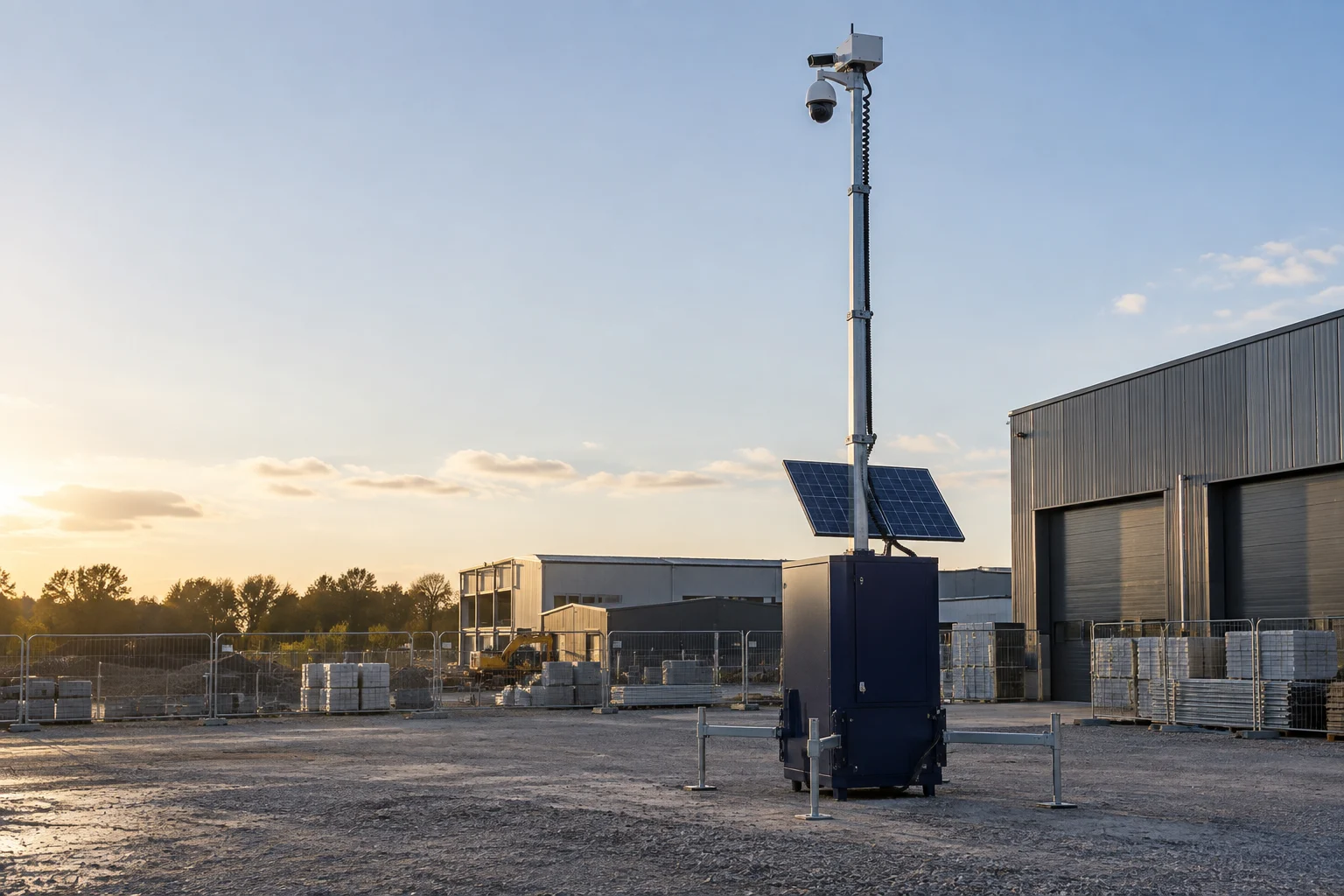
A CCTV tower is a self-contained, transportable surveillance unit mounted on a telescopic mast. Unlike fixed CCTV systems, which require cabling, a permanent power supply, and structural mounting points, towers are designed to be deployed within hours, repositioned as the project progresses, and removed without leaving permanent fixtures on the site.

Modern towers deployed across Belfast typically include:

  • Solar panels and lithium battery packs for off-grid or hybrid power
  • 4G/5G connectivity for remote monitoring without fixed broadband
  • PTZ cameras (pan-tilt-zoom) covering a 360-degree arc, often with thermal or infrared for night use
  • AI-enabled motion detection that distinguishes people from vehicles, animals, and environmental movement to reduce false alerts
  • Flashing amber deterrent beacons visible at significant range in Belfast’s often low-light conditions
  • Live monitoring integration with a 24/7 Alarm Receiving Centre (ARC)

This combination makes them well-suited to Belfast’s varied environment, covering dense city-centre construction, open waterfront development, suburban event sites, and edge-of-city retail parks.

CCTV Towers vs Fixed Cameras: Which Is Right for Your Belfast Project?

The honest answer depends on three factors: project duration, site mobility, and infrastructure availability.

Factor CCTV Tower Fixed Installation
Deployment time Hours Days to weeks
Power required Self-contained (solar/battery) Mains connection required
Cabling None Extensive
Planning permission Not required May be required
Repositioning Straightforward Major re-work
Cost Higher monthly hire Lower long-term cost
Best for Short-term, mobile, off-grid Permanent, stable sites

For most Belfast construction projects under 12 months, CCTV towers offer a compelling advantage. They do not require Section 36 notices under the Roads (NI) Order 1993 for temporary siting on construction land, and they can track the “hotspot” areas of a site as those areas shift during the build programme.

For a permanent installation after construction completes, fixed cameras become the better long-term investment. Advanced Overwatch installs both tower-based temporary systems and permanent fixed CCTV across greater Belfast; the right advice depends on your project timeline.

Construction Sites in Belfast: Where Towers Are Working Right Now

Belfast’s construction boom has produced some of the most demanding temporary surveillance environments in Northern Ireland. A few scenarios illustrate where towers add the most value.

City Centre Regeneration

Sites like Tribeca Belfast (formerly Royal Exchange) involve demolition, enabling works, and phased construction across a complex urban footprint bounded by North Street, Donegall Street, and Royal Avenue. These sites change shape constantly. A tower positioned for demolition phase may need to be repositioned completely once the basement dig begins. Remote repositioning within 24 hours is a genuine operational advantage.

Waterfront and Harbour Development

The Belfast Harbour area and City Quays developments sit on reclaimed land with limited traditional infrastructure. Mains power supply to temporary cabins can take weeks to organise through NIE Networks. A solar-and-battery CCTV tower eliminates that dependency entirely and can cover large open areas, including laydown yards and material storage, that are common on waterfront phases.

Residential Development on the Urban Fringe

Sites in east Belfast, Castlereagh, and the Newtownabbey/Glengormley corridor frequently involve greenfield or brownfield plots without utility connections. These are exactly the conditions where towers perform best.

Demolition and Remediation

Demolition sites present particular security challenges because they are often fenced but not enclosed, and demolition creates significant loose material risk. A tower positioned on the perimeter provides deterrence, documentation of any unauthorised entry, and an evidentiary record in the event of HSE or HSENI investigation.

Events in Belfast: Temporary CCTV for One-Off and Seasonal Events

Belfast’s events sector has grown substantially since COVID recovery, and large-scale events now require a formal security plan as part of the licence application to Belfast City Council. CCTV coverage is increasingly a condition of that licence, particularly for events with an expected attendance above a defined threshold.

Towers are the practical choice for most outdoor events in Belfast for three reasons:

Speed of deployment. A Boucher Road or Balmoral Show event requires surveillance to be in place before the build-out begins. A tower can be on site and operational the same day it arrives.

Coverage flexibility. Event footprints change between planning and execution. A tower that can be repositioned between the site walkthrough and gates opening is far more useful than a fixed camera that was in the right place last year.

Post-event removal. Event hire means the security infrastructure leaves with the event. There is no decommissioning, no cabling to remove, and no planning application to reverse.

Typical events in Belfast where tower hire has been used include:

  • Multi-day music festivals at Boucher Road Playing Fields
  • Outdoor sporting events with large perimeter zones
  • Commercial car boot sales and market events at large open-air sites
  • Construction phasing for the build-out of seasonal infrastructure

Professional Insight: What Experienced Installers Look for on a Belfast Site

From the experience of our installation teams working across Belfast and Greater Belfast, the two factors that most often determine whether a CCTV tower will perform as expected are sightline management and power strategy.

Sightline management in Belfast is complicated by the density of the urban environment. Many city-centre sites are surrounded by established buildings, hoardings, or scaffolding that create blind spots at ground level. Towers positioned without a proper sightline survey end up covering 80 metres of an empty road and missing the pedestrian access gate entirely. Before any tower is commissioned, a physical walkthrough of the site during daylight and after dark is the minimum standard.

Power strategy matters because Belfast’s weather, despite what you might expect from summer months, frequently involves periods of overcast conditions that limit solar panel performance. Towers relying purely on solar with inadequate battery backup can face periods of reduced performance in November through February. For year-round sites, a hybrid power strategy, combining solar with a small generator or mains top-up when available, is generally more reliable.

These are not hypothetical concerns. They are the most common fault points in temporary CCTV deployments that we are called in to fix after another supplier has failed to plan for local conditions.

What to Look for When Hiring a CCTV Tower in Belfast

Not all CCTV tower providers operate to the same standard. When evaluating suppliers for a Belfast project, check the following:

SSAIB or NSI certification. Any remote monitoring component of the system should be installed and managed by an SSAIB-certified or NSI Gold-certified company. Advanced Overwatch holds SSAIB certification (registration NIRE127) covering remote monitoring services. This is not a box-ticking exercise; it is the accreditation that most insurance underwriters and main contractors now require as a condition of the security specification.

Data protection compliance. Any CCTV system, temporary or permanent, must comply with the UK General Data Protection Regulation (UK GDPR) and the Data Protection Act 2018. This includes signage on site, a data retention policy, and a named Data Controller. If your supplier cannot provide documentation on how the recorded footage is handled, retained, and deleted, that is a red flag.

Monitoring vs detection only. Some tower packages include monitoring by a remote operator; others include only local detection and recording. If you require a verified alarm response (where an operator confirms an intrusion before dispatching a response), confirm this is included rather than assumed.

Maintenance provision. A tower that goes offline at 2 AM on a Saturday with no response plan is not a security asset. Confirm that your supplier provides 24/7 response to technical faults, not just business-hours support.

How Much Does CCTV Tower Hire Cost in Belfast?

Costs vary based on the tower specification, monitoring level, and contract duration. As a general guide for the Belfast market:

Tower Type Typical Monthly Hire Range
Basic solar tower, detection only £700 – £1,000
Mid-spec with remote monitoring £1,000 – £1,400
High-spec PTZ, 24/7 ARC monitoring, thermal £1,400 – £2,200

These are indicative market ranges. The total cost of a deployment also depends on delivery and setup charges, which vary by distance from the supplier’s base. Advanced Overwatch is based in Coleraine and services the Greater Belfast area regularly; delivery charges to central Belfast are typically included within competitive package pricing.

For projects where the question is between temporary hire and permanent installation, the break-even point is generally around 12-18 months. A fixed CCTV system installed by Advanced Overwatch typically has a 5-10 year operational lifespan with annual maintenance; the capital cost amortised over that period is almost always lower than equivalent monthly hire costs.

Can I use a CCTV tower on a public road or footpath in Belfast?

Placing any structure on a public road or footpath in Belfast requires consent from the Department for Infrastructure Roads (DFI Roads) under the Roads (Northern Ireland) Order 1993. This is separate from planning permission and applies even to temporary structures. Most CCTV tower deployments are sited on private land adjacent to the road, which does not require DFI consent. If your site requires a tower on or overhanging a public road, your supplier should be able to advise on the consent process and whether a Traffic Management Plan is required.

Does a construction site CCTV tower satisfy the requirements of the CDM Regulations 2015?

The Construction (Design and Management) Regulations 2015 require the Principal Contractor to make suitable arrangements for security of the site, including preventing unauthorised access. A CCTV tower can contribute to this obligation but does not replace the full security plan. The tower should be documented in the site Construction Phase Plan with details of coverage areas, monitoring arrangements, and the named responsible person for the system. HSENI inspectors in Northern Ireland have increasingly requested evidence of active monitoring rather than recording only.

What is the minimum contract length for CCTV tower hire in Belfast?

Most reputable suppliers in Northern Ireland offer a minimum hire period of one to three months, with monthly rolling contracts thereafter. Shorter “event hire” arrangements are available but typically carry a premium. If your project has a fixed programme, a fixed-term contract negotiated upfront usually offers better value than month-to-month rolling.

Standards Explained

BS 8418:2021 — The British Standard for the installation and remote monitoring of detector-activated CCTV systems. It defines the minimum requirements for a CCTV system to qualify as a monitored intruder alarm system, including camera specification, detection performance, and the Alarm Receiving Centre protocols for handling alerts. SSAIB and NSI certification schemes reference BS 8418 as the benchmark for remotely monitored CCTV systems in the UK.

BS EN 62676-4 — The European Standard for video surveillance systems used in security applications, Part 4 covering application guidelines. It provides a framework for designing and specifying CCTV systems appropriate to particular risk environments, including construction sites and temporary deployments. Specifying compliance with BS EN 62676-4 in a contract gives the client a documented basis for checking that the system delivered matches the system specified.

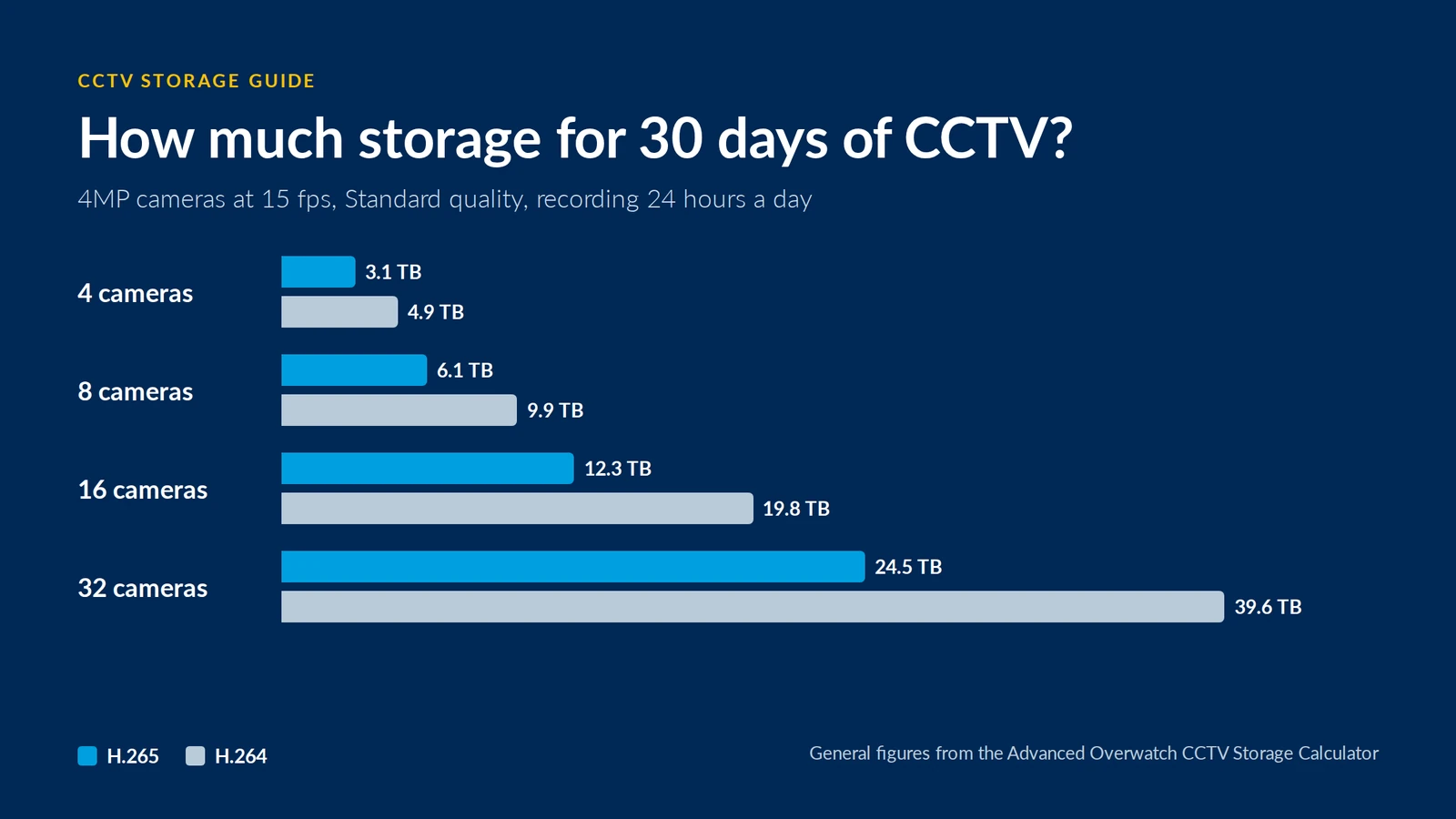
UK GDPR and the Data Protection Act 2018 — The UK’s post-Brexit implementation of GDPR governs how CCTV footage can be collected, stored, and used. Key obligations for CCTV operators include: displaying clear signage where cameras are in operation, limiting retention of footage to the minimum period necessary (typically 30-31 days for construction sites), providing a documented lawful basis for processing, and having a named Data Controller. The Information Commissioner’s Office (ICO) publishes specific guidance for CCTV operators, including construction site and event CCTV. Non-compliance can result in enforcement action regardless of whether the CCTV system is temporary or permanent.

When Does a Construction Site in Newry Need a CCTV Tower Instead of Fixed Cameras?

Quick Answer

A construction site in Newry needs a CCTV tower when the project is large enough that fixed camera coverage would require multiple installations across changing site layouts, or when the site lacks permanent power and data infrastructure. CCTV towers are self-contained units that can be deployed within hours, offer rapid repositioning as work progresses, and typically cost between £800-£1,500 per month hire in the Newry area. For short-term projects under three months, towers are almost always more cost-effective than fixed camera systems. For longer projects on established commercial or residential developments, fixed cameras become more economical after 6-9 months.

Read more

CCTV Towers Lisburn: Which Sites and Events Actually Need Temporary Surveillance?

Quick Answer

A CCTV tower is the right choice for most Lisburn construction sites lasting under 12 months, short-term events, and any site without existing power or data infrastructure. Tower hire in the Lisburn area typically costs between £800 and £1,500 per month, can be operational within hours of delivery, and does not require the cabling or planning permission that permanent installations demand. For projects longer than a year with stable layouts, fixed cameras usually offer better long-term value.

Read more

How Does an Access Control System Work? A Guide for Northern Ireland Businesses

An access control system works by verifying a user’s identity — via keycard, PIN, fingerprint, or smartphone — against a database of permissions before granting or denying physical access to a door, gate, or area. At its core, every system consists of a credential, a reader, a control panel, an electric lock, and software that logs every access event. Businesses in Northern Ireland installing access control must ensure their system complies with BS EN 60839-11-1:2013 (the product and system standard) and should use an SSAIB-certified installer such as Advanced Overwatch to guarantee regulatory compliance and insurance recognition.

Read more

What Fire Alarm System Do I Need for My Business in Northern Ireland?

If you run a business in Northern Ireland and you are wondering what fire alarm system you need, the short answer depends on your building type, occupancy, and how the premises is used. Most commercial buildings require a Grade A, Category L or P system designed to BS 5839-1:2017 – the British Standard that governs fire detection and alarm systems for buildings other than dwellings. A Category L system protects life; a Category P system protects property. In practice, most businesses need a combination. The system must be designed, installed, commissioned, and maintained by a competent company – ideally one that is SSAIB-certified and holds ISO 9001 certification. A fire risk assessment, which is a legal requirement for all non-domestic premises in Northern Ireland under the Fire and Rescue Services (Northern Ireland) Order 2006, will confirm exactly what category and coverage your premises needs. If you have not had a fire risk assessment, that is your starting point.

Read more

How to Set Up Remote Viewing on Your Dahua CCTV System

Quick Answer

Setting up remote viewing on your Dahua system takes about 20 minutes. You need the DMSS app (available free on iOS and Android), your NVR’s serial number or QR code, and a stable internet connection at your property. Professional installation ensures the network settings are configured correctly so your system is secure and accessible remotely without exposing it to unnecessary risk.

Read more

How to Choose the Right Abloy Locking Solution for Your Commercial Property

Quick Answer

Choosing the right Abloy locking solution depends on three factors: your door type, your security level required, and whether you need standalone or networked management. For most commercial properties in Northern Ireland: use Abloy electromechanical locks for high-security external doors, Smart Air for offices with up to 20 doors, and Incedo for larger or multi-site installations. We always conduct a site survey to confirm the right specification.

Read more

CCTV Regulations Northern Ireland: What You Need to Know Before Installing

Quick Answer

In Northern Ireland, CCTV installations must comply with UK GDPR (the UK General Data Protection Regulation) and the Data Protection Act 2018. For businesses, this means registering with the Information Commissioner’s Office (ICO), conducting a Data Protection Impact Assessment (DPIA), and following CCTV code of practice guidelines. For home installations, requirements are lighter but best practices still apply. The key principles are: have a legitimate reason to record, don’t capture more than you need, keep recordings secure, and delete them when no longer needed.

Read more

CCTV Regulations Northern Ireland: What You Need to Know Before Installing

Quick Answer

In Northern Ireland, CCTV installations must comply with UK GDPR (the UK General Data Protection Regulation) and the Data Protection Act 2018. For businesses, this means registering with the Information Commissioner’s Office (ICO), conducting a Data Protection Impact Assessment (DPIA), and following CCTV code of practice guidelines. For home installations, requirements are lighter but best practices still apply. The key principles are: have a legitimate reason to record, don’t capture more than you need, keep recordings secure, and delete them when no longer needed.

Read more

Ajax vs Orisec: Which Wireless Alarm System Should You Choose?

Quick Answer

Ajax is the better choice for properties where sleek design, app-based control, and expandability matter most. Orisec is the stronger option when you need hybrid wired/wireless flexibility and straightforward installation on a tighter budget. For most residential and small commercial properties in Northern Ireland, Ajax offers superior features. For larger sites requiring more zones or wired components, Orisec has the edge.

Read more

Call Me Back
Complete the form to receive a call back from a member of staff.

    Your Name

    Phone Number