
Quick Answer
Wired (PoE) cameras are better for most security installations in Northern Ireland. They provide reliable, interference-free video at full resolution, with no bandwidth limitations or signal dropouts. The only situation where wireless cameras might be considered is for temporary setups or where absolutely no cable route exists. For permanent security installations, we always recommend wired cameras. If running a cable isn’t possible, we use Ubiquiti wireless bridges to create a reliable point-to-point link, but the cameras themselves remain wired.
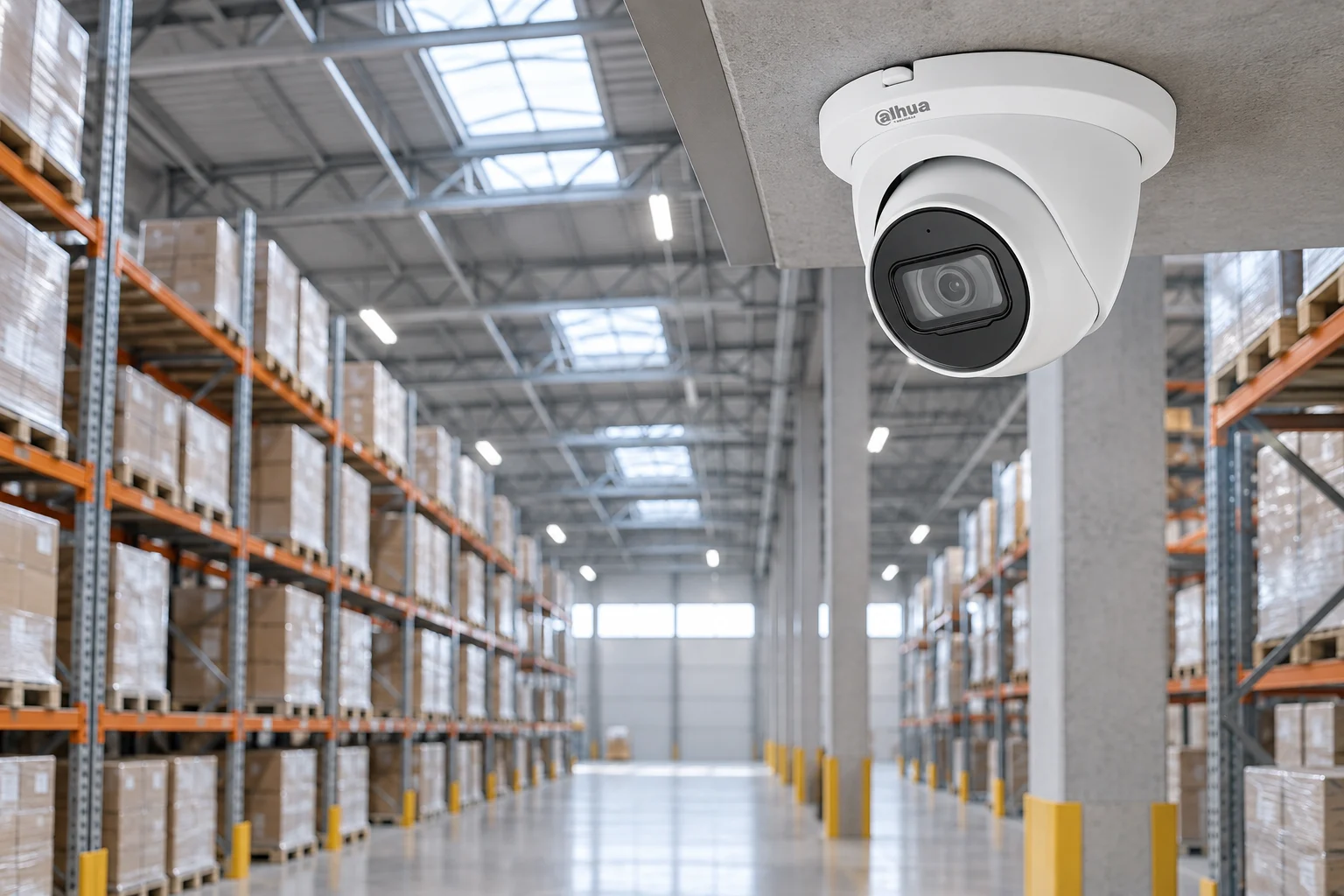
One of the most common questions we get from customers in Northern Ireland is whether they should choose wired or wireless cameras. The answer, for most situations, is straightforward: wired is better.
This guide explains why, and when wireless (or more accurately, wireless bridge solutions) might still be appropriate.
What Do We Mean by Wired vs Wireless?
Wired Cameras (PoE)
Power over Ethernet cameras use a single ethernet cable to carry both power and data. The cable runs from the camera back to the NVR (Network Video Recorder). This is a physical, fixed connection.
Wireless Cameras
For this guide, we’re talking about cameras that connect to your Wi-Fi network. They still need power (usually a plug-in adapter), but the video data transmits over Wi-Fi rather than a cable.
Wireless Bridges (Ubiquiti)
A wireless bridge is a dedicated point-to-point radio link between two locations. It’s not Wi-Fi in the conventional sense: it’s a dedicated connection that bridges two ethernet networks wirelessly. We commonly use Ubiquiti wireless bridges when:
- Running a cable between buildings isn’t practical
- A camera needs to be placed where no cable route exists
- The distance is too great for a standard cable run
The key distinction: cameras remain wired. The bridge replaces the cable, not the camera connection.
Why Wired Cameras Are Better
1. Reliability
Wired connections don’t drop out. Wi-Fi signals can be affected by:
- Walls and floors
- Neighbouring Wi-Fi networks
- Weather (heavy rain, thunderstorms)
- Electrical interference
For security, you need footage you can rely on. A camera that misses the crucial moment because of Wi-Fi interference isn’t protecting you.
2. Image Quality
Wi-Fi cameras often reduce resolution or frame rate to manage bandwidth. A 4MP Wi-Fi camera might only deliver 1080p or 720p in practice. Wired cameras deliver full resolution at full frame rate, all the time.
3. Latency
Wi-Fi introduces latency: a slight delay between what happens and when you see it. For real-time monitoring and faster incident response, wired is superior.
4. Bandwidth
A 4MP camera streaming continuously needs roughly 8-10Mbps of bandwidth. Multiple Wi-Fi cameras on the same network can saturate your broadband connection. Wired cameras don’t affect your internet performance.
5. Security
Wi-Fi cameras broadcast radio signals that can be intercepted. They’re also vulnerable to Wi-Fi jamming attacks. Wired connections are physically more secure: you can’t intercept data flowing through a cable without physical access.
6. Scalability
Wi-Fi networks have limited capacity. Add too many cameras and performance degrades. A well-designed wired network can support many more cameras without degradation.
When Wireless Bridges Are Appropriate
We use Ubiquiti wireless bridges in these situations:
- Between buildings on the same property (barns, workshops, guest houses)
- Over roads or driveways where burying cable isn’t feasible
- Across large distances where a single cable run isn’t practical
- In listed buildings where running cables would damage historic fabric
- Temporary installations at events or building sites
Ubiquiti bridges provide:
- Reliable 1km+ range (depending on model)
- Gigabit throughput for multiple camera streams
- Weatherproof outdoor units
- Lower latency than Wi-Fi
- Stable, dedicated connection
Common Misconceptions
“Wireless cameras are easier to install”
True for temporary setups, but for permanent security, the installation difference is minimal. A professional installer runs cables cleanly: often through attic spaces or outside cladding: with minimal disruption.
“Wi-Fi cameras are good enough for basic monitoring”
Basic monitoring still needs reliable footage. A camera that misses the break-in because of a Wi-Fi glitch provides false comfort.
“Wireless is the future”
In enterprise surveillance, wired remains the standard. Wi-Fi cameras are popular in consumer security because they’re easy for DIY installation. Professional installations prioritising reliability use wired.
Frequently Asked Questions
My property has thick walls: will Wi-Fi cameras work?
Probably not reliably. Thick stone walls (common in older NI properties) attenuate Wi-Fi signals significantly. A Ubiquiti bridge or running cables is more reliable.
Can I start with Wi-Fi cameras and upgrade later?
Yes, but budget for the upgrade from the start. Retrofitting cables is more disruptive than installing them initially.
What about the new Wi-Fi 6 cameras that claim 4K streaming?
Wi-Fi 6 improves matters, but the fundamental limitations remain: interference, bandwidth contention, and potential jamming. For critical security applications, wired is still the professional standard.
How far can Ubiquiti bridges reach?
Ubiquiti airMAX bridges provide reliable links up to 1km+ for point-to-point links. For longer distances or more complex requirements, we have enterprise-grade solutions.
What if the bridge fails?
Ubiquiti bridges are highly reliable. We also configure local recording on cameras so footage is captured even if the bridge link drops. We use enterprise-grade equipment specified for your specific distance and environment.
Summary
| Choose Wired (PoE) if… | When to choose a Ubiquiti bridge |
|---|---|
| New installation | Cable route impossible |
| Any permanent security setup | Between buildings on same property |
| Need full resolution/frame rate | Listed building restrictions |
| Critical security (businesses) | Distance too great for cable |
| Multiple cameras | Temporary or semi-permanent |
Related reading
- Service page: CCTV installation in Northern Ireland
- Related guide: How Much Does CCTV Cost in Northern Ireland?
- Related guide: Dahua IP Camera Resolution Explained: 2MP vs 4MP vs 8MP in 2026
- Related guide: Why is my CCTV camera showing a black or blank image?
- All of our guides: Knowledge Base